
Why the Running Craze Is Finally Easing Off the Gas
Korea’s Running Boom Is Changing Direction
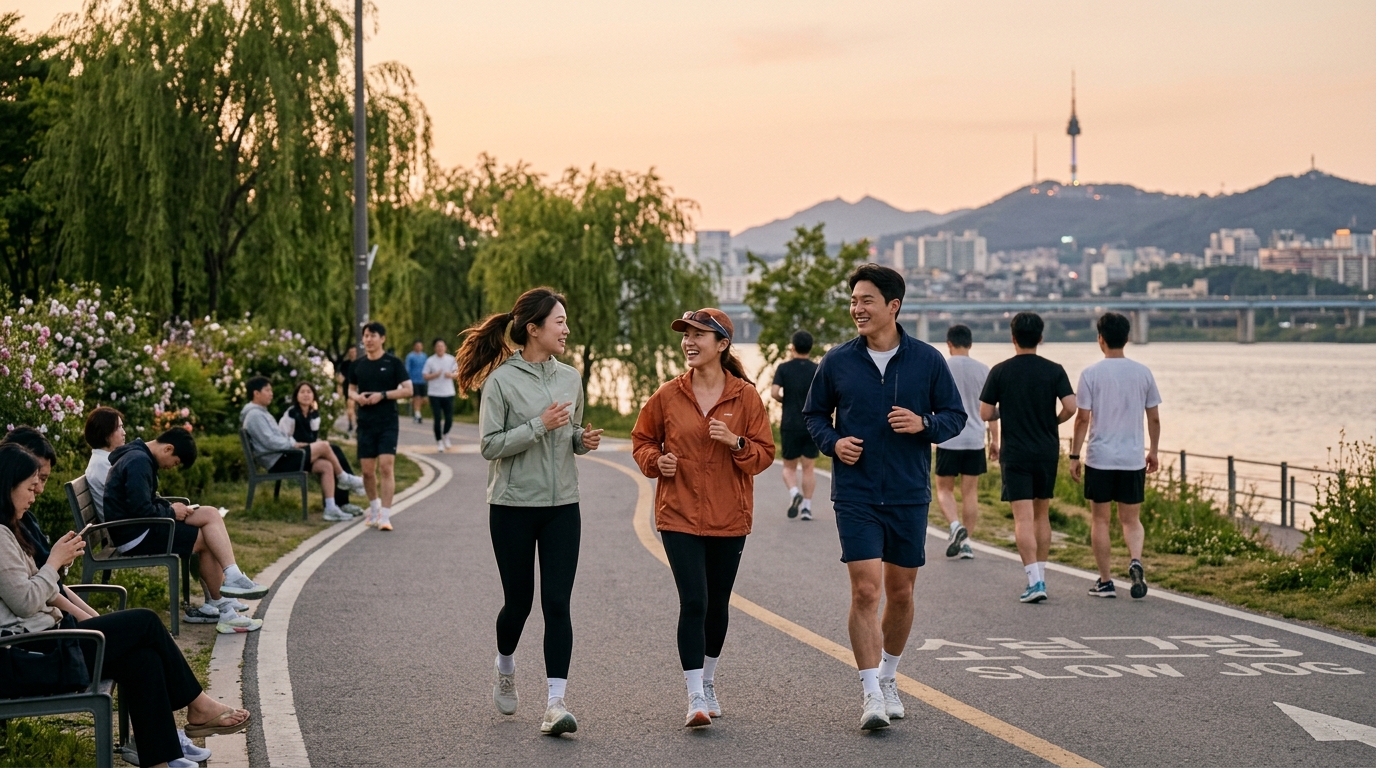
Running is still one of the biggest fitness trends in Korea, but the mood around it is shifting. For years, the culture focused on pace, records and proving progress through numbers. Watches, apps and social media pushed runners to go faster and compare every kilometer. But now, more people are stepping into a different style of movement: slower, gentler and more sustainable running.
러닝은 여전히 한국에서 가장 큰 운동 트렌드 중 하나이지만, 그 분위기는 분명히 달라지고 있습니다. 오랫동안 러닝 문화는 기록과 속도, 그리고 숫자로 증명되는 성과에 집중해 왔습니다. 스마트워치와 앱, SNS는 사람들에게 더 빨리 달리고 매 킬로미터를 비교하도록 만들었습니다. 그러나 이제는 더 느리고, 더 부드럽고, 더 지속 가능한 방식의 러닝으로 방향을 바꾸는 사람들이 점점 늘어나고 있습니다.

What Slow Jogging Actually Means
Slow jogging is not just running badly or lazily. It is a deliberate pace that lets you breathe comfortably and even hold a conversation while moving. For many people, that means about 8 to 9 minutes per kilometer, sometimes even slower. In Seoul’s My Pace Morning event, runners were not chasing finish times. They were talking with companions, pushing strollers, running with dogs and simply moving at the speed their bodies liked best.
슬로 조깅은 단순히 느리게 달리는 것이거나 대충 하는 러닝이 아닙니다. 편안하게 숨을 쉬고, 달리면서도 대화할 수 있는 속도로 움직이는 의도적인 방식입니다. 많은 사람들에게 이는 킬로미터당 8분에서 9분 정도, 때로는 그보다 더 느린 속도를 의미합니다. 서울의 마이 페이스 모닝 행사에서는 참가자들이 기록을 쫓지 않았습니다. 동행과 이야기를 나누고, 유모차를 밀고, 반려견과 함께 달리며 몸이 가장 편안해하는 속도에 맞춰 움직였습니다.
Why More Runners Are Slowing Down
The biggest reason is simple: the fast way often hurts. People who once ran long distances at high intensity are now realizing that constant speed pressure can lead to overuse injuries, fatigue and burnout. “Lee Young-sik” said he used to run 300 kilometers a month but often got injured, and slowing down helped reduce that risk. For many runners in their 30s and 40s, protecting joints and staying consistent now matters more than chasing personal bests.
더 많은 러너들이 속도를 늦추는 가장 큰 이유는 단순합니다. 너무 빠른 러닝은 자주 몸을 망가뜨리기 때문입니다. 한때 강도 높은 장거리 러닝을 하던 사람들도 이제는 끊임없이 속도를 추구하는 문화가 과사용 부상과 피로, 번아웃으로 이어질 수 있다는 사실을 깨닫고 있습니다. “이영식”은 한 달에 300킬로미터를 달리던 시절 잦은 부상을 겪었고, 속도를 줄인 뒤 그 위험이 크게 줄었다고 말했습니다. 30대와 40대 러너들에게는 이제 개인 최고 기록보다 관절을 지키고 꾸준히 달리는 것이 더 중요해지고 있습니다.

Slower Does Not Mean Less Effective
One of the most interesting things about this trend is that slower running can still deliver real health benefits. Research suggests that even short daily runs at lower speeds are associated with reduced cardiovascular and overall mortality risk. Another study found that slow jogging improved aerobic capacity and muscle function in older adults. So this is not about doing less. It is about training in a way that the body can actually keep doing.
이 트렌드에서 흥미로운 점은 느린 러닝도 충분히 건강 효과를 줄 수 있다는 사실입니다. 연구에 따르면 낮은 속도로 짧게 달리는 것만으로도 심혈관 질환과 전체 사망 위험 감소와 관련이 있을 수 있습니다. 또 다른 연구에서는 슬로 조깅이 고령층의 유산소 능력과 근육 기능 향상에도 도움이 되는 것으로 나타났습니다. 즉, 이것은 덜 하는 운동이 아니라 몸이 지속적으로 받아들일 수 있는 방식으로 운동하는 방법이라고 볼 수 있습니다.
Running as Joy, Not Just Performance
Maybe the biggest lesson of slow jogging is emotional. It reminds people that running does not have to be a test every time. Like in “What I Talk About When I Talk About Running,” the real value of movement is often found in rhythm, repetition and the quiet relationship between body and mind. In Korea, the running craze is not ending. It is simply learning how to breathe.
슬로 조깅이 주는 가장 큰 교훈은 어쩌면 감정적인 것일지도 모릅니다. 달리기는 매번 시험처럼 할 필요가 없다는 사실을 다시 떠올리게 하기 때문입니다. “What I Talk About When I Talk About Running”처럼 움직임의 진짜 가치는 기록보다 리듬과 반복, 그리고 몸과 마음 사이의 조용한 관계 속에서 발견되는 경우가 많습니다. 한국의 러닝 열풍은 끝나고 있는 것이 아니라, 이제야 제대로 숨 쉬는 법을 배우고 있는 것인지도 모릅니다.