
Why the Brand Crisis Became a Labor Crisis Too
A Marketing Scandal Did Not Stop at the Brand
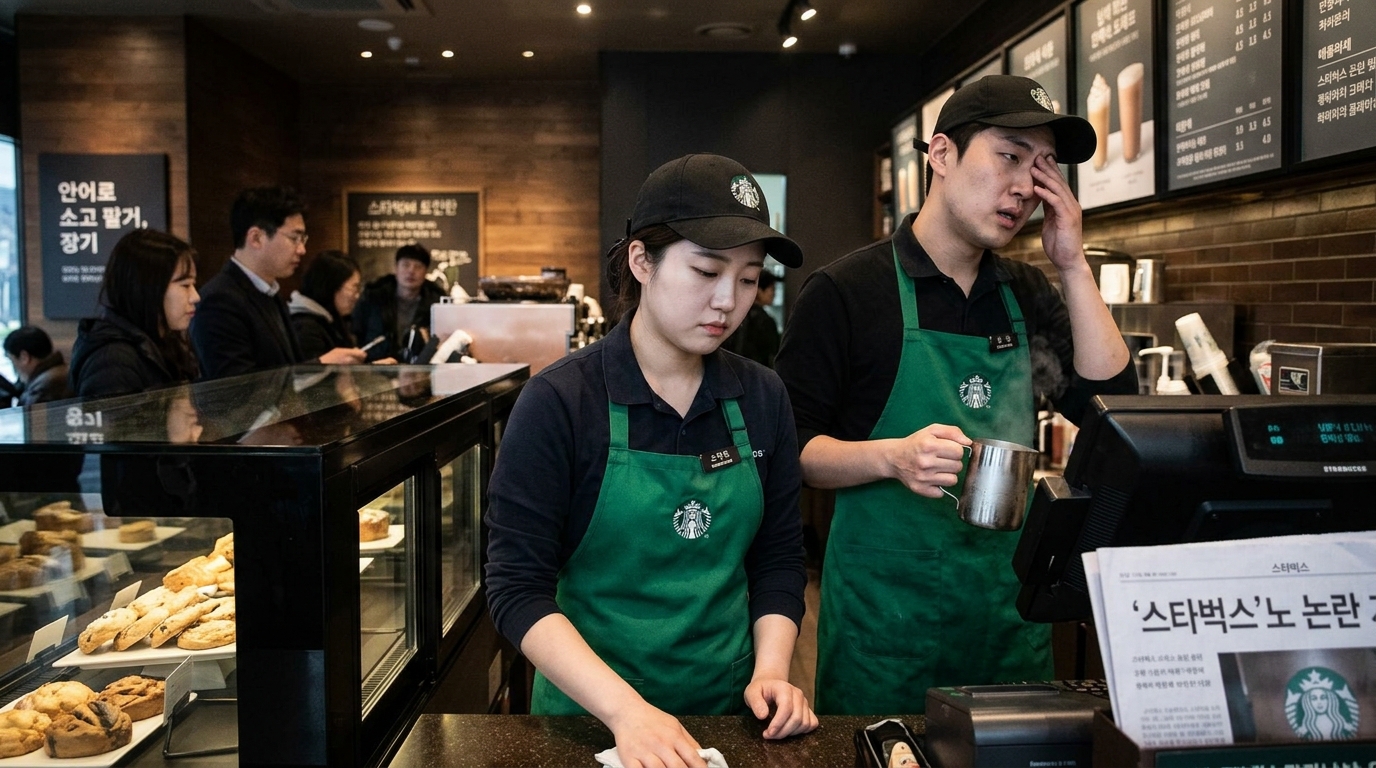
The “Tank Day” controversy was widely discussed as a branding disaster, but for Starbucks Korea workers, it became something more personal and more exhausting. According to union leader “Lee Yong-bin,” the fallout did not stay at the level of public criticism or corporate apology. It landed directly on frontline employees, who suddenly had to absorb angry customer reactions, schedule changes and, in some stores, even reduced income.
‘탱크 데이’ 논란은 주로 브랜드 차원의 참사로 이야기되었지만, 스타벅스 코리아 노동자들에게는 훨씬 더 개인적이고 더 피로한 문제로 다가왔습니다. 노조 대표 “이용빈”의 설명에 따르면 이 사건의 여파는 단순한 여론 비판이나 회사의 사과에서 끝나지 않았습니다. 현장 직원들이 고객의 분노를 직접 받아내야 했고, 매장에 따라서는 스케줄 변화와 월급 감소까지 감당해야 했습니다.

Frontline Workers Paid the Price
What makes this case especially painful is that the people facing the consequences were not the ones who made the decisions. Store workers had no authority over the controversial campaign, yet they were the ones answering questions, handling complaints and dealing with the sudden mood shift after the boycott began. In stores where customer numbers dropped sharply, even overtime hours that used to supplement income disappeared. The scandal hurt both emotional stability and real wages.
이 사건이 특히 더 아프게 느껴지는 이유는 결과를 떠안은 사람들이 정작 그 결정을 내린 당사자들이 아니었다는 점입니다. 매장 직원들은 문제의 프로모션을 기획하거나 승인할 권한이 전혀 없었지만, 고객 응대와 항의, 불매운동 이후의 급격한 분위기 변화를 직접 견뎌야 했습니다. 고객 수가 크게 줄어든 매장에서는 평소 월급을 보완해 주던 초과근무 시간까지 사라졌습니다. 이 사건은 정서적 안정뿐 아니라 실제 수입에도 영향을 미쳤습니다.
Why the Union Says This Was Structural
For “Lee Yong-bin,” the issue goes beyond one bad campaign. He argues that Starbucks Korea has long suffered from one-way communication, where worker concerns are heard but rarely acted on. Existing internal channels, such as the Happiness Council, are seen by many employees as too weak to create meaningful change. The union’s rise reflects a growing belief that only an organized labor voice can negotiate with the company on equal terms.
“이용빈”에게 이 문제는 단순히 한 번의 잘못된 캠페인으로 끝나지 않습니다. 그는 스타벅스 코리아가 오랫동안 일방향적인 소통 구조를 가지고 있었고, 현장의 문제 제기가 실제 변화로 이어지지 않는 경우가 많았다고 보고 있습니다. 행복협의회 같은 기존 내부 채널 역시 많은 직원들에게는 실질적인 변화를 만들기엔 너무 약한 장치로 인식되고 있습니다. 이번 노조 결성은 결국 조직된 노동의 목소리만이 회사와 보다 대등한 위치에서 협상할 수 있다는 인식이 커지고 있음을 보여줍니다.

Workload, Safety and Pride Are All Connected
The union is also drawing attention to the everyday physical strain of the job. Workers repeatedly lift heavy milk boxes, large liquid containers and metal equipment under intense time pressure, and many reportedly suffer from wrist and lower-back pain. At the same time, understaffing makes it harder to offer the kind of customer connection that Starbucks once used as part of its identity. For many workers, this is not only about money. It is also about dignity and pride in the work itself.
노조는 일상적인 업무의 신체적 부담도 함께 강조하고 있습니다. 직원들은 강한 시간 압박 속에서 무거운 우유 박스와 액체 용기, 금속 장비를 반복적으로 다뤄야 하며, 실제로 손목과 허리 통증을 겪는 경우가 많다고 합니다. 동시에 인력 부족은 스타벅스가 한때 브랜드 정체성으로 내세웠던 고객과의 진짜 연결을 만들기 어렵게 합니다. 많은 노동자들에게 이 문제는 단순한 임금의 문제가 아니라, 일에 대한 존엄과 자부심의 문제이기도 합니다.
A Local Union With Global Meaning
The timing is also notable because Starbucks unionization has been spreading internationally, especially in the United States. “Lee Yong-bin” said Starbucks Workers United in America already sent a message of solidarity. Like in “The Grapes of Wrath,” local labor struggles often become bigger stories about fairness, voice and survival. What happened after “Tank Day” may have started as a branding crisis, but it is now revealing deeper questions about who carries the burden when companies fail.
이 노조 결성이 더욱 주목받는 이유는 스타벅스의 노동조합 움직임이 미국을 비롯한 해외에서도 확산되고 있기 때문입니다. “이용빈”은 미국의 Starbucks Workers United가 이미 연대 메시지를 보내왔다고 전했습니다. “The Grapes of Wrath”처럼 지역의 노동 문제는 종종 공정성과 발언권, 생존에 대한 더 큰 이야기로 확장됩니다. ‘탱크 데이’ 이후 벌어진 일은 브랜드 위기로 시작되었지만, 이제는 기업이 실패했을 때 그 부담을 누가 떠안게 되는가라는 훨씬 더 깊은 질문을 드러내고 있습니다.