
Why the New Market Is Raising Big Health Concerns
A Label That Sounds Safer Than It May Be
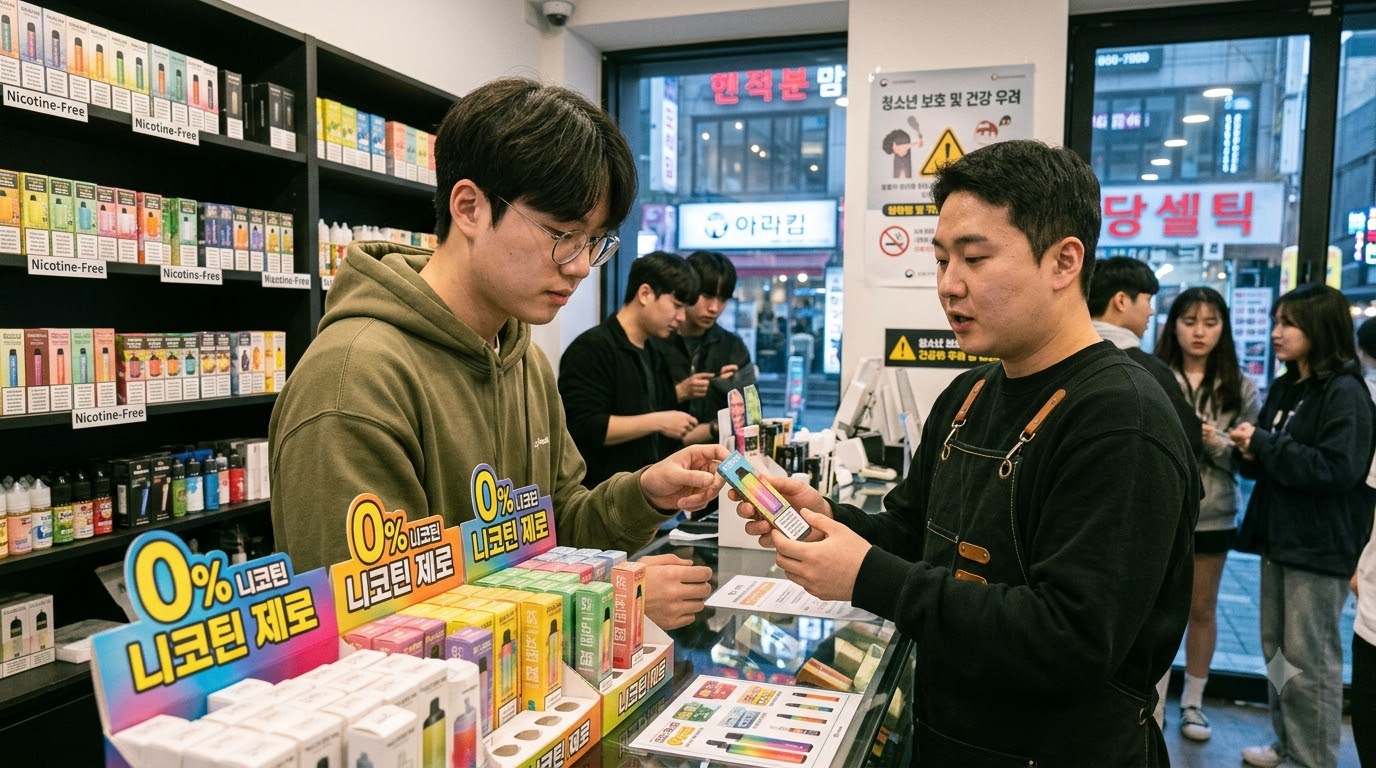
In Korea, a new wave of vapes labeled “nicotine-free” is creating serious concern. On the surface, the message sounds simple and even reassuring. No nicotine, no problem — right? But recent tests suggest the reality may be far more dangerous. Some products marketed as nicotine-free were found to contain nicotine itself, while others contained nicotine analogues like 6-methyl nicotine, a chemical that may act similarly in the body.
한국에서는 ‘니코틴 프리’라고 표시된 새로운 전자담배 제품들이 큰 우려를 낳고 있습니다. 겉으로 보면 그 표현은 단순하고 안심되는 것처럼 들릴 수 있습니다. 니코틴이 없으니 문제도 없을 것 같기 때문입니다. 하지만 최근 검사 결과는 현실이 훨씬 더 위험할 수 있다는 점을 보여주고 있습니다. 니코틴이 없다고 홍보된 일부 제품에서는 실제 니코틴이 검출되었고, 또 다른 제품에서는 6-메틸니코틴 같은 니코틴 유사체가 발견되었습니다.

How a Law Change Created a New Loophole
This new market grew rapidly after Korea revised its Tobacco Business Act and began treating synthetic nicotine vapes as tobacco products. That meant higher taxes and much more expensive retail prices. In response, the market quickly shifted toward products not yet clearly regulated — especially those advertised as nicotine-free or based on nicotine analogues. In short, regulation closed one door, and the market immediately opened another.
이 새로운 시장은 한국이 담배사업법을 개정해 합성니코틴 전자담배를 담배 제품으로 분류한 이후 빠르게 커졌습니다. 그 결과 세금이 붙고 가격이 크게 오르자, 시장은 아직 명확한 규제 대상이 아닌 제품들로 빠르게 이동했습니다. 특히 니코틴 프리 제품이나 니코틴 유사체를 사용한 제품들이 그 빈틈을 채웠습니다. 다시 말해, 규제가 하나의 문을 닫자 시장은 즉시 다른 문을 연 셈입니다.
Why the Results Are So Alarming
The most troubling part is that the products do not always match their claims. Government testing found nicotine in some popular so-called nicotine-free vapes and detected nicotine analogues in others. Authorities also warned that 6-methyl nicotine is not a substance that has been adequately assessed for safety either in Korea or internationally. That means consumers may be inhaling chemicals that are not only misleadingly labeled, but also poorly understood.
가장 우려되는 부분은 제품 표시와 실제 성분이 일치하지 않는 경우가 있다는 점입니다. 정부 조사에서는 인기 있는 니코틴 프리 전자담배 가운데 일부에서 실제 니코틴이 검출되었고, 다른 일부에서는 니코틴 유사체가 발견되었습니다. 당국은 6-메틸니코틴이 국내외에서 안전성이 충분히 검증되지 않은 물질이라고도 경고했습니다. 이는 소비자들이 단지 잘못 표시된 제품을 사용하는 것에 그치지 않고, 그 성질조차 충분히 파악되지 않은 화학물질을 흡입하고 있을 가능성이 있다는 뜻입니다.

Teenagers and Cheap Access Make It Worse
Another reason the issue feels urgent is accessibility. These products became attractive not only to adult smokers trying to avoid higher prices, but also to teenagers. Since some are framed as cleaner or less harmful, they can appear easier to justify. As critics point out, the phrase “nicotine-free” can reduce guilt and lower caution, even when the product may still carry serious health risks.
이 문제가 더 시급하게 느껴지는 이유는 접근성 때문입니다. 이 제품들은 가격 인상을 피하려는 성인 흡연자들뿐 아니라 청소년들에게도 쉽게 매력적으로 보일 수 있습니다. 일부는 더 깨끗하거나 덜 해로운 제품처럼 포장되기 때문에 심리적 장벽도 낮습니다. 비판하는 사람들의 지적처럼, ‘니코틴 프리’라는 표현은 죄책감을 줄이고 경계심을 낮출 수 있지만 실제 건강 위험은 여전히 매우 클 수 있습니다.
Korea Now Faces a Familiar Tech-Regulation Problem
This case shows a broader policy pattern: regulation often moves slower than product innovation. Like in “Frankenstein,” the problem is not only what has been created, but how little control exists once it enters the world. Korea is now rushing to test these substances and coordinate a response across multiple ministries. But the deeper lesson is clear. A product should not feel safe simply because the label says so.
이 사례는 더 넓은 정책 문제도 보여줍니다. 규제는 종종 제품 혁신보다 느리게 움직인다는 점입니다. “Frankenstein”처럼 문제는 무엇이 만들어졌는가만이 아니라, 그것이 세상에 나온 뒤 얼마나 통제가 어려운가에도 있습니다. 한국 정부는 이제 여러 부처가 함께 독성 검사를 진행하고 대응책을 준비하고 있습니다. 하지만 더 근본적인 교훈은 분명합니다. 제품 라벨이 안전해 보인다고 해서 실제로 안전한 것은 아니라는 점입니다.