
The Culture Behind Korea’s Summer Commute
The Strange Sight of Bare Eyes in Summer
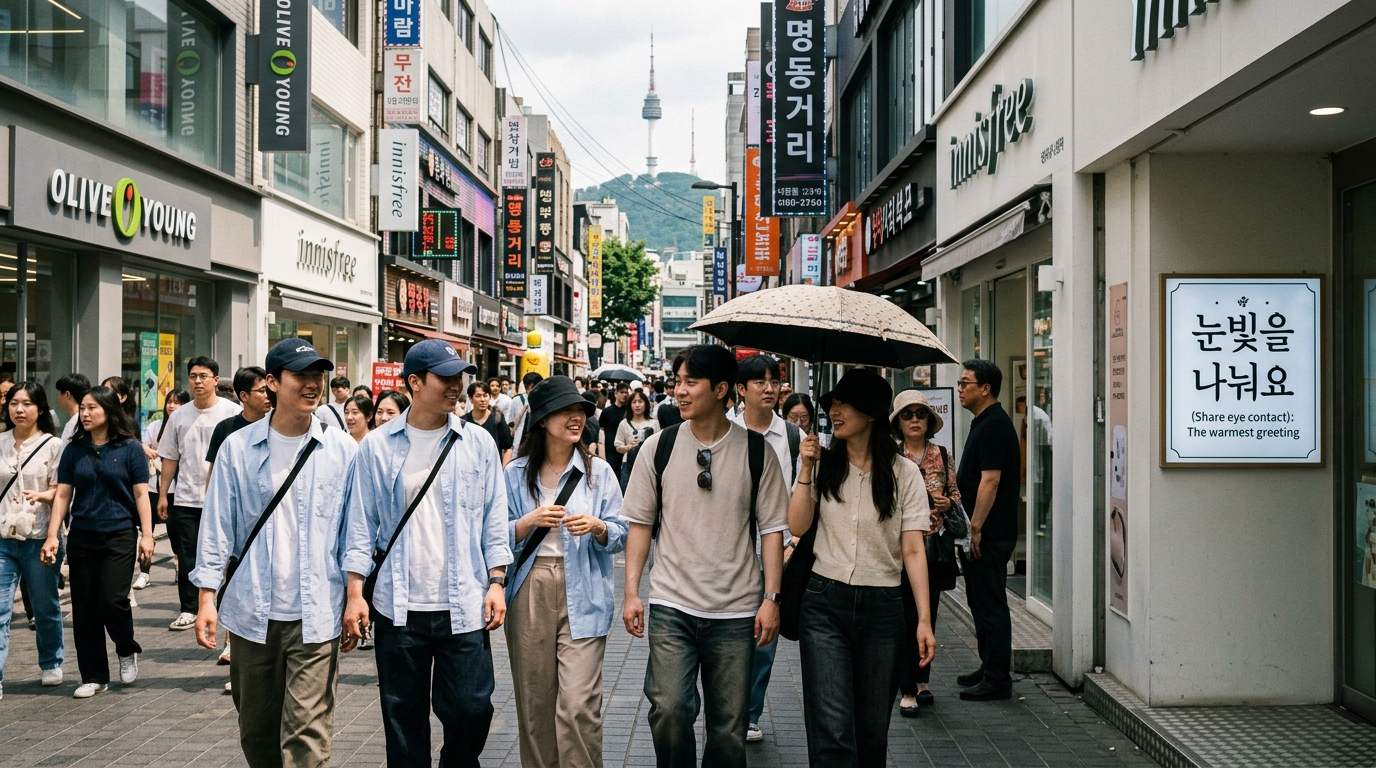
If you spend time in Seoul during summer, one thing may feel surprisingly different: not many people wear sunglasses on the way to work. For foreigners like “Ella Mitchell,” this can be a real culture shock. In many countries, sunglasses are a basic summer item for commuting, lunch breaks and walking outside. In Korea, however, many office workers would rather carry a parasol than wear dark shades during the workday.
서울의 여름 거리를 걷다 보면 의외로 낯설게 느껴지는 장면이 있습니다. 바로 출근길에 선글라스를 쓴 사람이 생각보다 많지 않다는 점입니다. “엘라 미첼” 같은 외국인에게는 이것이 꽤 큰 문화적 놀라움이 될 수 있습니다. 많은 나라에서는 선글라스가 출퇴근, 점심시간, 외출 시 기본적인 여름 아이템으로 여겨지지만, 한국에서는 직장인들이 근무일 낮 시간에 선글라스보다 양산을 선택하는 경우가 훨씬 더 많습니다.

Why Showing Your Eyes Matters
One major reason is cultural. According to “Han Min,” visible eyes are closely connected to sincerity and respectful communication in East Asian societies influenced by Confucian values. In this context, sunglasses can create distance. Eyes are often seen as the key to reading emotion, attentiveness and social tone. That is why some office workers feel uncomfortable wearing sunglasses around senior colleagues, even if the sun is strong.
이 현상의 중요한 배경에는 문화적인 이유가 있습니다. “한민”의 설명에 따르면 유교적 가치관의 영향을 받은 동아시아 사회에서는 눈을 드러내는 것이 진정성과 예의 있는 소통과 깊게 연결되어 있습니다. 이런 맥락에서 선글라스는 사람 사이에 거리를 만드는 요소처럼 느껴질 수 있습니다. 눈은 감정과 집중력, 관계의 분위기를 읽는 중요한 단서로 여겨지기 때문에, 햇빛이 강하더라도 상사나 선배 앞에서는 선글라스를 착용하는 것이 부담스럽게 느껴지는 경우가 많습니다.
Too Stylish for the Office?
There is also a style issue. In Korean office culture, sunglasses are often seen not just as practical but as noticeably fashionable. And that can be a problem in environments where blending in matters more than standing out. Many workers choose muted clothes in black, navy or gray, and in that setting sunglasses can feel like a strong statement. As “Byun Sung-won” said, even with a simple outfit, sunglasses can make it look like you are trying to be stylish.
또 다른 이유는 스타일의 문제입니다. 한국 직장 문화에서 선글라스는 단순한 실용품이 아니라 다소 패셔너블한 아이템으로 인식되는 경우가 많습니다. 그리고 눈에 띄지 않는 것이 중요한 환경에서는 이것이 오히려 부담이 될 수 있습니다. 많은 직장인들이 검정, 네이비, 회색 같은 차분한 색의 비즈니스 캐주얼을 선택하는데, 그 안에서 선글라스는 꽤 강한 존재감을 가집니다. “변성원”의 말처럼, 단순한 옷차림에도 선글라스 하나만으로 ‘멋을 부리려는 사람’처럼 보일 수 있는 것입니다.

Why Parasols Win Instead
In Korea, UV protection is often understood more through skincare than eye health. That is why parasols feel more acceptable. They protect the skin, match the local beauty mindset and do not block eye contact. Sales data shows that sun umbrella demand has surged, especially with younger people now choosing more minimal, monochrome designs. So while sunglasses may feel natural in many countries, in Seoul the parasol often wins the office commute battle.
한국에서는 자외선 차단이 눈 건강보다 피부 관리의 관점에서 더 자주 이해됩니다. 그래서 양산이 더 자연스러운 선택으로 받아들여집니다. 피부를 보호해 주고, 한국의 뷰티 중심 사고방식과도 잘 맞으며, 눈을 가리지 않기 때문에 대인 관계에서도 부담이 적습니다. 실제 판매 데이터에서도 양산 수요는 크게 늘었고, 젊은 세대 역시 단색의 절제된 디자인을 선호하며 적극적으로 사용하고 있습니다. 그래서 많은 나라에서는 선글라스가 자연스럽지만, 서울의 출근길에서는 양산이 더 자주 선택되는 것입니다.
Protection and Perception Are Not the Same
Still, eye doctors warn that dark irises do not mean UV safety. “Hwang Hyung-bin” explained that while darker eyes may feel less glare, they are not protected from UV damage. This makes the Korean habit especially interesting: practical health advice and social comfort do not always point in the same direction. Like in “The Great Gatsby,” appearance and meaning often drift apart. In Seoul, what people wear in the sun says as much about culture as it does about weather.
그렇지만 안과 전문의들은 어두운 홍채가 자외선 안전을 의미하지는 않는다고 경고합니다. “황형빈”은 검은 눈동자가 눈부심을 덜 느끼게 할 수는 있어도 자외선 손상으로부터 눈을 보호해 주는 것은 아니라고 설명했습니다. 그래서 한국의 이 습관은 더욱 흥미롭게 보입니다. 실제 건강 관리에 필요한 조언과 사회적 편안함이 항상 같은 방향을 가리키는 것은 아니기 때문입니다. “The Great Gatsby”처럼 겉으로 보이는 것과 그 안의 의미는 종종 어긋나기도 합니다. 서울의 여름 태양 아래에서 무엇을 쓰느냐는 날씨만큼이나 문화에 대한 이야기를 담고 있습니다.