
Why Foreign Shoppers Plan Korea Trips Around Olive Young Sales
When a Beauty Sale Becomes a Travel Reason
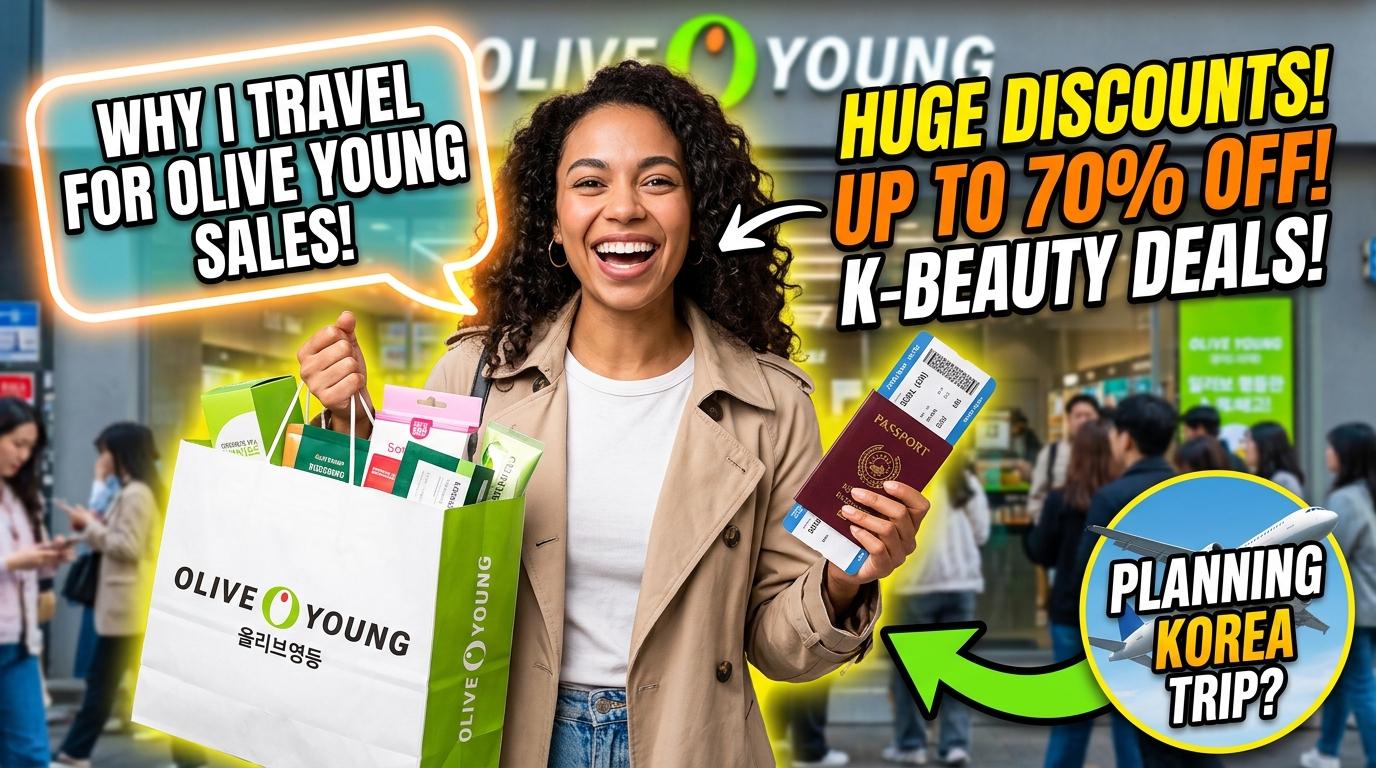
Imagine booking a flight not for cherry blossoms or K-pop concerts, but for a beauty sale. That is exactly what is happening in Korea right now. Foreign tourists are increasingly planning their trips around Olive Young’s seasonal sales, and the numbers prove it. According to recent data, the number of repeat foreign shoppers during the March and June sale seasons this year was 11 times higher than three years ago. This is no longer just shopping — it is beauty tourism.
벚꽃이나 K-팝 콘서트가 아니라 뷰티 세일을 위해 항공권을 예약한다는 것을 상상해 보신 적 있으신가요? 지금 한국에서 실제로 그런 일이 벌어지고 있습니다. 해외 관광객들이 올리브영의 시즌 세일 일정에 맞춰 한국 방문을 계획하고 있으며, 수치도 이를 뒷받침하고 있습니다. 최근 발표된 데이터에 따르면 올해 3월과 6월 세일 기간에 재방문한 외국인 고객 수는 3년 전보다 11배 증가했습니다. 이는 단순한 쇼핑이 아니라 새로운 형태의 뷰티 관광이라고 볼 수 있습니다.

Why Shoppers Keep Coming Back
What makes this trend even more interesting is that many of these customers are not first-time visitors. They are repeat travelers who come two or more times a year, specifically during sale periods in March, June, September and December. Some visitors even return three times within a single year. The reason seems simple: trust. After trying K-beauty products at home and seeing results, shoppers come back to stock up during discount periods.
이 흐름에서 더 흥미로운 점은 많은 고객들이 처음 방문하는 관광객이 아니라는 사실입니다. 이들은 1년에 두 번 이상, 특히 3월, 6월, 9월, 12월 세일 기간에 맞춰 재방문하는 여행객들입니다. 어떤 경우에는 한 해에 세 번 이상 찾는 고객도 있다고 합니다. 이유는 비교적 명확합니다. 신뢰입니다. 집에서 K-뷰티 제품을 사용해보고 만족한 소비자들이 할인 기간에 맞춰 다시 한국을 방문해 제품을 대량 구매하는 것입니다.
K-Beauty’s Expanding Map
Another notable shift is that shopping is no longer limited to central Seoul. During the June sale, foreign sales at stores outside Seoul rose significantly, showing that K-beauty demand is spreading beyond tourist hotspots like Myeongdong. At the same time, Olive Young’s global online platform also saw a massive increase in overseas traffic. This suggests a hybrid shopping model where online discovery leads to offline travel, and offline experiences fuel online loyalty.
또 하나 눈에 띄는 변화는 쇼핑 지역이 서울 중심에서 점차 확장되고 있다는 점입니다. 6월 세일 기간 동안 서울 외 지역 매장의 외국인 매출이 크게 증가하며 명동 같은 관광 중심지를 넘어 수요가 퍼지고 있음을 보여주었습니다. 동시에 올리브영 글로벌 온라인몰 방문자 수도 크게 늘었습니다. 이는 온라인에서 브랜드를 접한 뒤 오프라인 매장을 방문하고, 다시 온라인 구매로 이어지는 하이브리드 소비 구조가 형성되고 있음을 시사합니다.

Beyond Discounts: Experience and Curation
The appeal of Olive Young’s sale season is not just lower prices. It is also about scale and curation. With over 1,500 beauty brands participating, shoppers can compare, test and explore a wide range of products in one place. The in-store experience — tax refund services, multilingual assistance and organized displays — adds convenience that online shopping alone cannot replace. In a way, this is the beauty version of “Eat Pray Love” — travel, discover and return transformed.
올리브영 세일 시즌의 매력은 단순한 할인에만 있지 않습니다. 1,500개가 넘는 브랜드가 참여하며, 소비자들은 한 공간에서 다양한 제품을 비교하고 체험할 수 있습니다. 매장 내 택스 리펀드 서비스, 다국어 안내, 체계적인 진열 방식은 온라인 쇼핑이 대신하기 어려운 편의성을 제공합니다. 어떤 면에서는 이것이 뷰티판 “Eat Pray Love”와도 같습니다. 여행하고, 발견하고, 달라진 모습으로 돌아가는 경험입니다.
A New Form of Soft Power
This phenomenon shows how K-beauty has evolved into a form of cultural influence. Foreign shoppers are not just buying cosmetics; they are participating in a lifestyle tied to Korean culture. As repeat visits increase, Olive Young is becoming more than a retailer — it is becoming a destination. If this momentum continues, Korea’s beauty industry may find that its strongest marketing tool is not advertising, but the flight ticket.
이 현상은 K-뷰티가 하나의 문화적 영향력으로 자리 잡았음을 보여줍니다. 해외 소비자들은 단순히 화장품을 구매하는 것이 아니라, 한국 라이프스타일의 일부를 경험하고 있습니다. 재방문이 늘어날수록 올리브영은 단순한 소매점이 아니라 하나의 목적지가 되고 있습니다. 이 흐름이 계속된다면, 한국 뷰티 산업의 가장 강력한 마케팅 도구는 광고가 아니라 항공권이 될지도 모릅니다.