
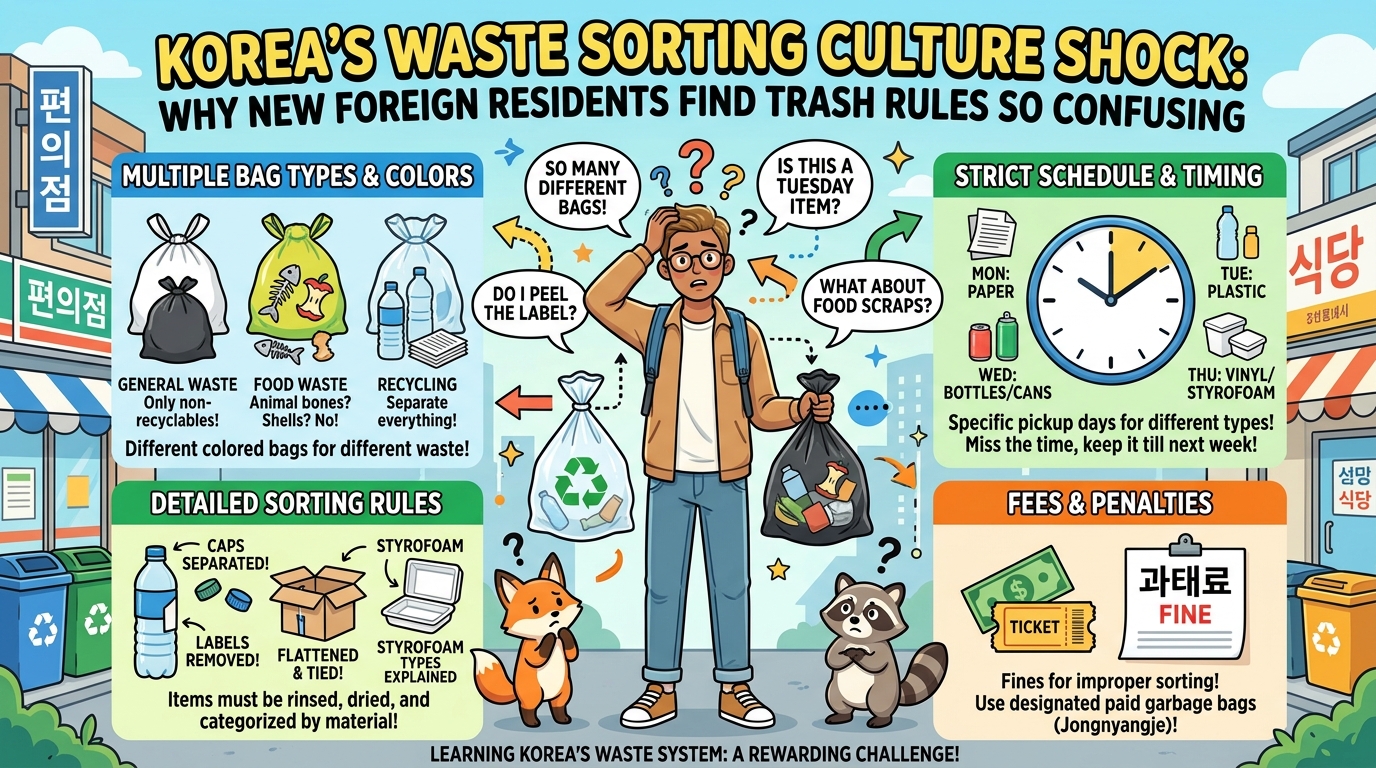
Why New Foreign Residents Find Trash Rules So Confusing
Why Throwing Away Trash Feels Complicated in Korea
For many foreigners arriving in Korea, one of the first unexpected challenges is not housing, banking or transportation — it is trash. Korea’s waste management system is strict, detailed and surprisingly hard to decode if you did not grow up with it. General waste, food waste, recyclables, disposal schedules and designated bags all come with rules. What feels normal to Koreans can feel like a daily puzzle to newcomers.
한국에 처음 온 외국인들에게 예상 밖의 어려움 중 하나는 집 구하기나 은행 업무, 교통보다도 오히려 쓰레기 배출인 경우가 많습니다. 한국의 폐기물 관리 시스템은 매우 엄격하고 세분화되어 있어서, 익숙하지 않은 사람에게는 이해하기가 쉽지 않습니다. 일반 쓰레기, 음식물 쓰레기, 재활용품, 배출 시간, 종량제 봉투까지 모두 규칙이 따로 존재합니다. 한국인에게는 익숙한 일상이지만, 처음 온 사람에게는 매일 풀어야 하는 작은 퍼즐처럼 느껴질 수 있습니다.

Small Questions, Big Confusion
The confusion often starts with simple but tricky details. Are onion skins food waste? Should bottle caps be removed from glass bottles? Can trash be put out anytime? These are not silly questions. They are exactly the kind of things international students and foreign workers struggle with when settling into Korean life. People like “Cristina” from Peru and “Tan Yong Xin” from Malaysia said they thought they had adjusted, only to discover new rules they had never learned before.
혼란은 대개 사소하지만 까다로운 질문에서 시작됩니다. 양파 껍질은 음식물 쓰레기일까요? 유리병은 뚜껑을 분리해야 할까요? 쓰레기는 아무 때나 버릴 수 있을까요? 이런 질문들은 결코 우스운 것이 아닙니다. 한국 생활에 적응하는 과정에서 유학생과 외국인 노동자들이 실제로 자주 겪는 고민이기 때문입니다. 페루 출신의 “Cristina”와 말레이시아 출신의 “Tan Yong Xin”처럼, 이미 적응했다고 생각했지만 처음 듣는 규칙을 뒤늦게 알게 되는 경우도 많습니다.
Why Local Governments Are Stepping In
Because signs and fines alone were not enough, some local governments are now offering direct education. Seoul’s Jung District, which has the highest share of foreign residents in the city, began targeted recycling programs to explain waste sorting in Korean and English. These workshops do more than teach rules. They reduce stress, prevent illegal dumping and help foreigners feel more confident in their everyday lives. In some places, local officials are even visiting dormitories and workplaces to offer on-site guidance.
표지판과 과태료 안내만으로는 충분하지 않다는 판단 아래, 일부 지방자치단체들은 직접 교육에 나서고 있습니다. 서울 중구는 서울에서 외국인 비율이 가장 높은 지역답게, 한국어와 영어로 재활용 교육 프로그램을 운영하기 시작했습니다. 이런 워크숍은 단순히 규칙을 알려주는 데 그치지 않습니다. 쓰레기 배출에 대한 스트레스를 줄이고, 불법 투기를 예방하며, 외국인들이 일상생활에서 더 큰 자신감을 가질 수 있도록 돕습니다. 어떤 지역에서는 기숙사나 사업장을 직접 찾아가는 현장 교육도 진행하고 있습니다.

Waste Sorting Is Really About Social Integration
At a deeper level, this issue is about more than trash. It is about belonging. Knowing how to sort waste properly is part of learning how a society works, what it values and how neighbors share responsibility. Hands-on programs like picking up litter or making shampoo bars from recycled coffee grounds turn waste education into community participation. Like in “The Little Prince,” what looks small at first can reveal something much bigger about connection and care.
더 깊이 들여다보면 이 문제는 단순히 쓰레기만의 문제가 아닙니다. 소속감의 문제이기도 합니다. 올바르게 분리배출하는 방법을 아는 것은 그 사회가 어떻게 작동하는지, 무엇을 중요하게 여기는지, 이웃들이 어떤 책임을 함께 나누는지를 배우는 과정이기도 합니다. 쓰레기 줍기나 커피 찌꺼기로 샴푸바를 만드는 체험 같은 프로그램은 폐기물 교육을 공동체 참여의 경험으로 바꾸어 줍니다. “The Little Prince”처럼 처음에는 사소해 보이는 일이 결국 관계와 배려에 대해 더 큰 의미를 드러내는 셈입니다.
A Better Welcome Starts With Clear Rules
As Korea becomes more international, even everyday systems like waste disposal need better translation, explanation and empathy. For foreign residents, learning the trash rules may seem small, but it can shape how welcome and capable they feel in a new country. And for Korean communities, helping newcomers understand those rules is not just about cleaner streets — it is about building a more inclusive society.
한국 사회가 점점 더 국제화될수록, 쓰레기 배출처럼 일상적인 제도 역시 더 나은 번역과 설명, 그리고 공감이 필요해집니다. 외국인 주민들에게 쓰레기 규칙을 배우는 일은 작아 보일 수 있지만, 새로운 나라에서 자신이 얼마나 환영받고 있는지, 또 얼마나 잘 살아갈 수 있는지를 크게 좌우할 수 있습니다. 그리고 한국 지역사회 입장에서도 새로운 주민들이 이런 규칙을 이해하도록 돕는 일은 단지 거리를 깨끗하게 유지하는 문제가 아니라, 더 포용적인 사회를 만드는 일과 연결되어 있습니다.