
Why Korea’s Broadcast Debate Feels Bigger Than One Outfit
When New Technology Repeats Old Stereotypes
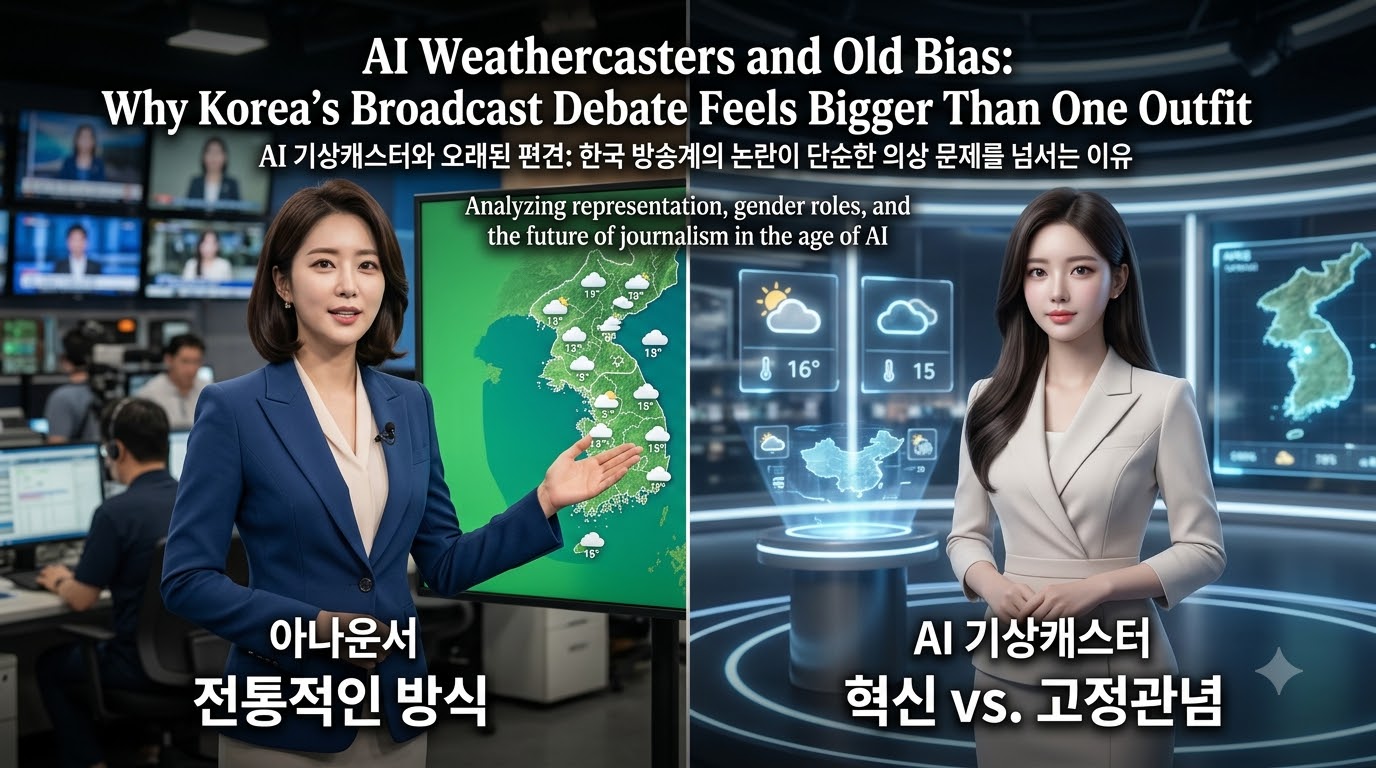
South Korea is moving quickly into AI broadcasting, but one recent controversy shows that new technology does not automatically create new values. An AI-generated weathercaster named “Kim Si-a” triggered backlash after appearing in a tight, revealing outfit during an online weather report. What should have been a simple showcase of innovation quickly turned into a bigger argument about sexism, media representation and the risks of letting AI inherit old human biases.
한국은 AI 방송 기술 도입 속도가 매우 빠른 편이지만, 최근의 한 논란은 새로운 기술이 자동으로 새로운 가치를 만들어내는 것은 아니라는 사실을 보여주었습니다. AI로 생성된 기상캐스터 “김시아”가 온라인 날씨 영상에서 몸에 밀착되고 노출이 강조된 의상을 입고 등장하면서 큰 비판을 받았습니다. 단순한 기술 시연으로 끝날 수 있었던 장면은 곧 성차별과 미디어 재현, 그리고 AI가 오래된 인간의 편견을 그대로 물려받을 수 있다는 문제로 확장되었습니다.

Why the Outfit Became a Flashpoint
The strongest criticism was not about whether the presenter was human or artificial. It was about why a female virtual weathercaster was designed in a way that seemed to emphasize appearance over credibility. Critics argued that this objectified women and reproduced the same visual expectations that real female broadcasters have long faced. In other words, AI did not create a fresh broadcasting language. It simply repeated one that many people already considered outdated and unfair.
가장 강한 비판은 이 캐스터가 인간인지 AI인지에 대한 것이 아니었습니다. 왜 여성형 가상 기상캐스터가 전문성보다 외모를 더 부각하는 방식으로 설계되었는지에 대한 문제 제기였습니다. 비판자들은 이것이 여성을 대상화하고, 실제 여성 방송인들이 오랫동안 겪어온 시각적 기대를 그대로 반복한다고 지적했습니다. 다시 말해 AI가 새로운 방송 문법을 만든 것이 아니라, 이미 많은 사람들이 낡고 불공정하다고 여겨온 문법을 그대로 되풀이한 것입니다.
AI in Broadcasting Is Expanding Fast
This debate matters even more because AI is spreading quickly across Korean media. Broadcasters are already experimenting with virtual weathercasters, synthetic radio news voices and AI reporters that can generate scripts and videos. The appeal is obvious: lower costs, faster production and the ability to scale structured formats like weather and short news updates. But the more these systems expand, the more important it becomes to ask who is shaping their tone, style and values.
이 논쟁이 더욱 중요하게 느껴지는 이유는 AI가 한국 방송 전반으로 빠르게 확산되고 있기 때문입니다. 방송사들은 이미 가상 기상캐스터, 합성 음성 뉴스, 스크립트와 영상까지 생성하는 AI 기자를 시험하고 있습니다. 장점도 분명합니다. 비용 절감과 빠른 제작, 그리고 날씨나 짧은 뉴스처럼 정형화된 형식을 대량으로 운영할 수 있다는 효율성입니다. 하지만 이런 시스템이 확대될수록, 그 말투와 스타일, 가치관을 누가 설계하는가를 묻는 일이 더욱 중요해집니다.

Bias in the Code Is Still Bias
Experts warn that AI systems often reflect the data, assumptions and social norms they are built from. That means gender stereotypes do not disappear just because a machine is speaking. They may actually become harder to notice because they come wrapped in the language of innovation. Like in “Frankenstein,” the real issue is not only what is created, but what kind of values its creator leaves inside it.
전문가들은 AI 시스템이 결국 그것을 만든 데이터와 가정, 사회적 규범을 반영한다고 경고합니다. 즉 기계가 말한다고 해서 젠더 고정관념이 사라지는 것은 아닙니다. 오히려 혁신이라는 이름으로 포장되면서 더 눈에 띄지 않게 퍼질 수도 있습니다. “Frankenstein”처럼 중요한 것은 무엇이 만들어졌는가만이 아니라, 그 안에 어떤 가치가 심어졌는가 하는 점입니다.
The Bigger Question Is Human Judgment
In the end, this is not just a story about one AI weathercaster’s clothes. It is about the future of broadcasting itself. As AI takes on more visible roles, media companies will need more than technical skill. They will need editorial judgment, ethical standards and the courage to question what feels “normal.” Otherwise, the future of AI news may look efficient on the surface while carrying the same old problems underneath.
결국 이 문제는 한 AI 기상캐스터의 의상만을 둘러싼 이야기가 아닙니다. 방송의 미래 전체와 연결된 문제입니다. AI가 점점 더 눈에 띄는 역할을 맡게 될수록, 미디어 기업들은 기술력만으로는 충분하지 않게 됩니다. 편집적 판단과 윤리적 기준, 그리고 무엇이 ‘당연한’ 것으로 보이는지 다시 질문할 수 있는 용기가 함께 필요합니다. 그렇지 않다면 AI 뉴스의 미래는 겉보기에는 효율적으로 보이면서도, 그 안에는 여전히 오래된 문제를 그대로 품고 있게 될 수 있습니다.