
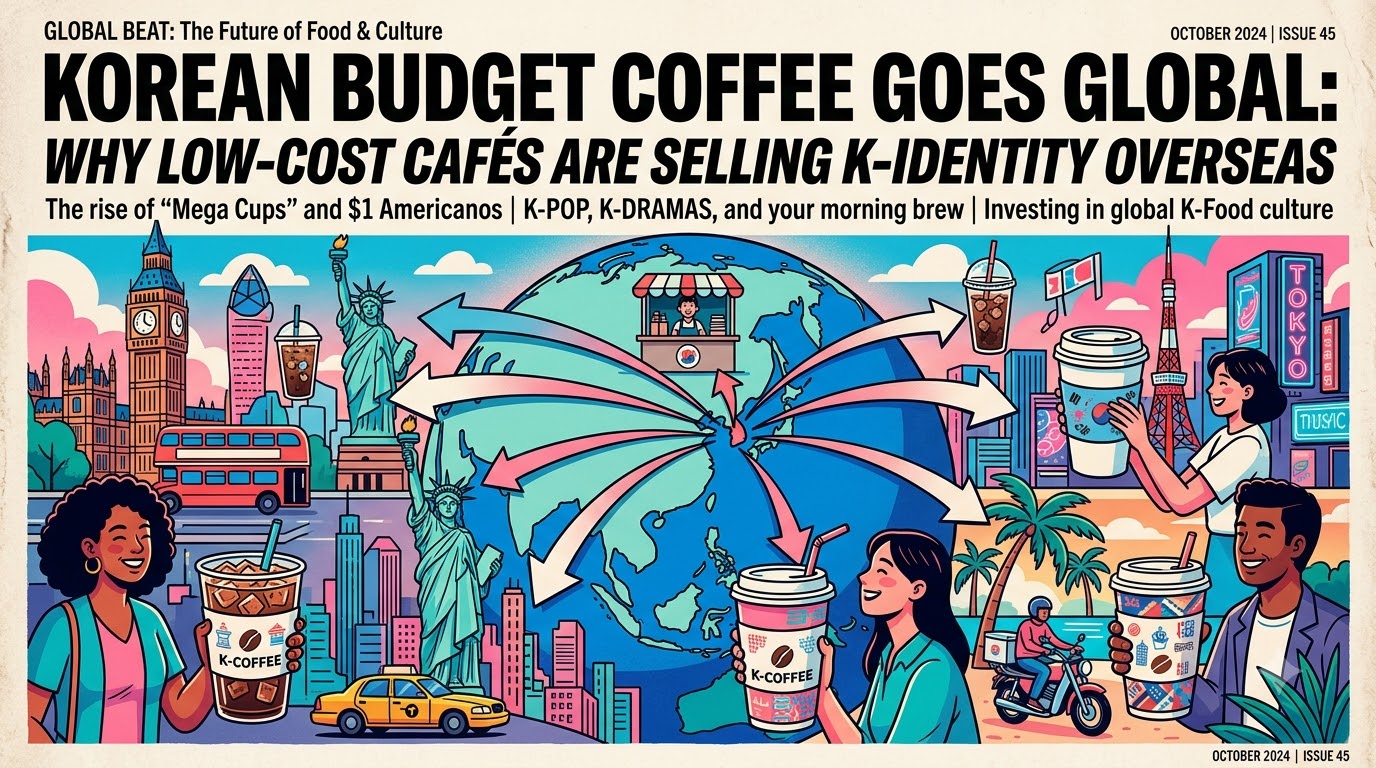
Why Low-Cost Cafés Are Selling K-Identity Overseas
Korea’s Cheap Coffee Model Is Looking Beyond Home
Korea’s budget coffee chains grew fast by offering what local customers wanted most: cheap drinks, easy access and familiar menus on every corner. But that formula is now hitting limits at home. With too many stores, rising coffee bean prices and pressure from exchange rates, profit margins are getting tighter. So the next big move is clear: go overseas. And not just with low prices, but with a distinctly Korean identity.
한국의 저가 커피 체인들은 저렴한 가격과 높은 접근성, 익숙한 메뉴를 바탕으로 빠르게 성장해 왔습니다. 하지만 그 공식은 이제 국내에서 한계에 가까워지고 있습니다. 매장 수는 포화 상태에 이르고, 원두 가격 상승과 환율 압박까지 더해지면서 수익성은 점점 줄어들고 있습니다. 그래서 다음 선택지는 분명해졌습니다. 바로 해외 진출입니다. 그리고 그 핵심 무기는 단순한 저가 전략이 아니라, 분명한 한국적 정체성입니다.

A Wave of Openings Shows the New Direction
This month alone, several Korean coffee chains opened stores abroad almost back-to-back. Ediya entered Laos, while Compose Coffee and The Venti launched in the Philippines. Mega Coffee is already operating in Mongolia and preparing for further expansion, and Paik’s Dabang is building a wider presence across the Philippines, China and Japan. These moves show that overseas expansion is no longer a side project. It is becoming a central growth strategy.
이번 달에만 여러 한국 커피 브랜드가 해외에서 거의 연이어 새 매장을 열었습니다. 이디야는 라오스에 진출했고, 컴포즈커피와 더벤티는 필리핀에서 첫 매장을 열었습니다. 메가커피는 이미 몽골에서 운영 중이며 추가 확장을 준비하고 있고, 빽다방도 필리핀과 중국, 일본에서 존재감을 넓히고 있습니다. 이러한 움직임은 해외 진출이 더 이상 부가적인 시도가 아니라, 핵심 성장 전략으로 바뀌고 있음을 보여줍니다.
K-Identity Is Becoming the Real Menu
What makes this expansion different is the role of Korean culture. These brands are not just exporting coffee. They are exporting a Korean café experience. That includes drinks like dalgona latte, desserts shaped by Korean tastes and even merchandise using traditional Korean patterns or ornaments. In other words, K-coffee is starting to follow the same path as K-food and K-beauty: turning local familiarity into global lifestyle branding.
이번 해외 진출이 흥미로운 이유는 한국 문화가 메뉴의 일부가 되고 있다는 점입니다. 이 브랜드들은 단순히 커피만 수출하는 것이 아니라, 한국식 카페 경험 자체를 함께 내보내고 있습니다. 달고나 라테 같은 음료와 한국적인 취향이 반영된 디저트, 전통 문양이나 장신구를 활용한 굿즈까지 포함됩니다. 다시 말해 K-커피는 이제 K-푸드와 K-뷰티가 걸어온 길처럼, 로컬의 익숙함을 글로벌 라이프스타일 브랜딩으로 바꾸려는 단계에 들어섰습니다.

Low Price Alone Will Not Be Enough
Still, price by itself will not carry these brands forever. Industry insiders say success abroad will depend on much more than affordability. Stable local supply chains, smart localization and stronger brand value will matter just as much. That means Korean chains must learn how to adapt menus, operations and technology to each market while keeping the K-style image that made them appealing in the first place.
그렇다고 해서 낮은 가격만으로 이 브랜드들이 계속 성공할 수 있는 것은 아닙니다. 업계에서는 해외 시장에서의 성패가 단순한 가격 경쟁력을 넘어, 안정적인 현지 공급망과 정교한 현지화, 그리고 브랜드 가치 강화에 달려 있다고 보고 있습니다. 결국 한국 커피 체인들은 각 시장에 맞는 메뉴와 운영 방식, 기술을 조정하면서도 처음 매력적으로 보였던 K-스타일 이미지를 유지해야 하는 과제를 안게 됩니다.
From Commodity Coffee to Cultural Brand
This shift may be the most important part of the story. Budget coffee in Korea began as a convenience business, but abroad it is trying to become something more emotional and memorable. Like in “The Great Gatsby,” price may open the door, but identity is what makes people stay. If these chains succeed, they will not just be selling coffee. They will be selling a small, drinkable version of contemporary Korean culture.
이 변화에서 가장 중요한 부분은 바로 여기에 있을 수 있습니다. 한국의 저가 커피는 원래 편의성과 가성비 중심의 사업으로 출발했지만, 해외에서는 더 감정적이고 기억에 남는 브랜드가 되려 하고 있습니다. “The Great Gatsby”처럼 가격은 문을 열게 만들 수 있지만, 결국 사람을 머물게 하는 것은 정체성입니다. 만약 이 체인들이 성공한다면, 그들은 단순히 커피를 파는 것이 아니라 오늘날 한국 문화를 마실 수 있는 형태로 전달하는 브랜드가 될 것입니다.