
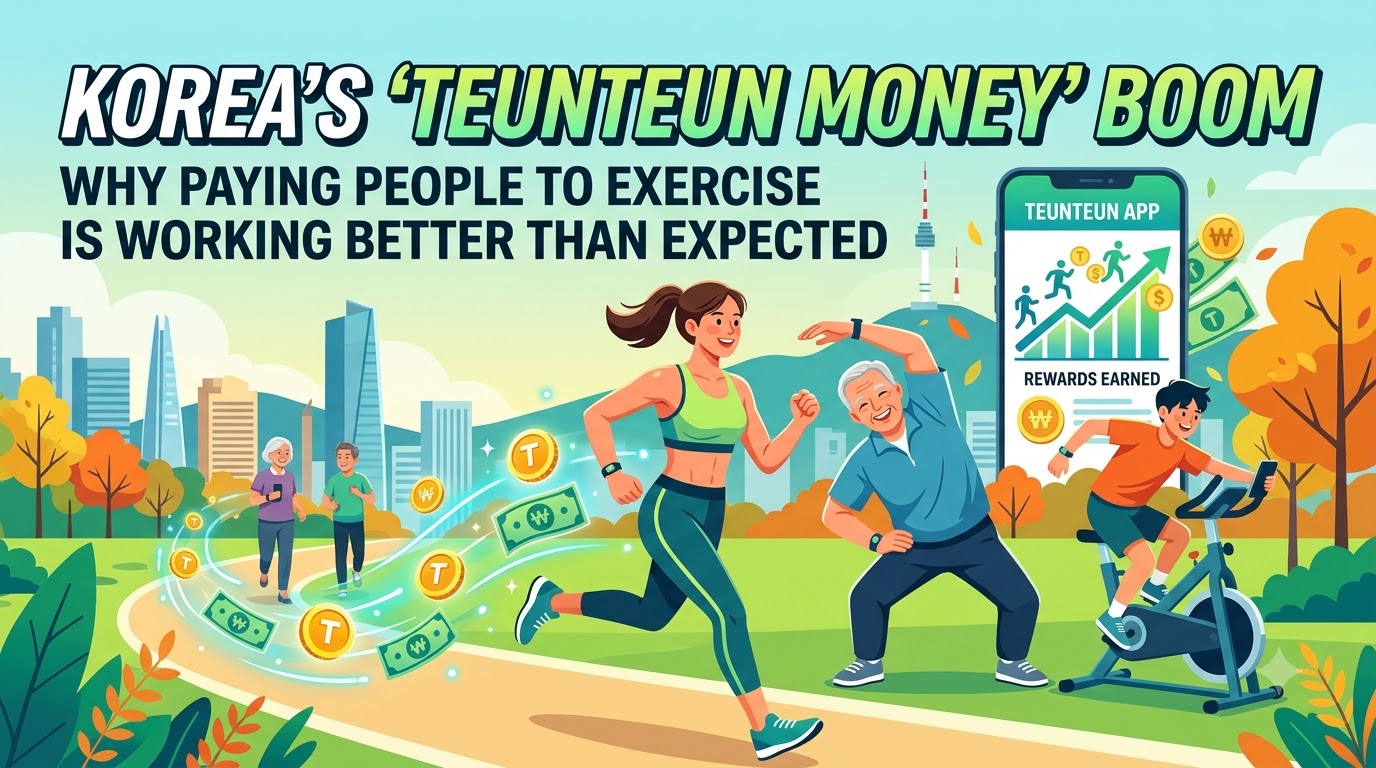
Why Paying People to Exercise Is Working Better Than Expected
Exercise Rewards Are Suddenly a Big Hit
South Korea’s public fitness incentive program is growing so fast that even a doubled budget was not enough. The government’s “Teunteun Money” program, which rewards people with cash-equivalent points for exercise, has seen participation roughly double this year. That alone would be impressive. But what makes the story even more interesting is that people are not only signing up — they are actually exercising more.
한국의 운동 인센티브 프로그램이 예상보다 훨씬 빠르게 커지고 있습니다. 정부의 ‘튼튼머니’ 사업은 운동을 하면 현금처럼 쓸 수 있는 포인트를 주는 방식인데, 올해 참여자가 거의 두 배로 늘었습니다. 이것만으로도 상당히 인상적입니다. 하지만 더 흥미로운 점은 사람들이 단순히 가입만 하는 것이 아니라, 실제로 운동량까지 늘리고 있다는 사실입니다.

More People, More Movement
By the end of July, nearly 700,000 citizens had earned points through the system, compared with about 317,000 during the same period last year. Even after the reward rate per 30-minute workout session was cut in half to slow demand, enthusiasm kept rising. More importantly, the average exercise time per participant rose by 19 percent year-on-year. In real terms, that means about two extra hours of physical activity per person.
7월 말 기준으로 약 70만 명의 시민이 이 제도를 통해 포인트를 적립했으며, 이는 지난해 같은 기간 약 31만 7천 명과 비교하면 매우 큰 증가입니다. 30분 운동당 적립 포인트를 절반으로 줄였음에도 불구하고 열기는 계속 커졌습니다. 더 중요한 것은 참여자 1인당 평균 운동 시간이 전년 대비 19퍼센트 늘어났다는 점입니다. 실제 시간으로 보면 한 사람당 약 2시간의 추가 운동 효과가 생긴 셈입니다.
Why Teunteun Money Feels Practical
Part of the success comes from how usable the program has become. Participants can earn up to 50,000 points a year, then spend those points on gym memberships, sports goods or even local shops. Recent digital upgrades made it even easier to use. A mobile app launched in March simplified tracking, while integration with private fitness apps allowed users to earn rewards not just for running, but also for stair climbing, trail walking and other outdoor activities.
이 프로그램이 잘 작동하는 이유 중 하나는 실용성이 높아졌기 때문입니다. 참가자는 연간 최대 5만 포인트를 적립할 수 있고, 이를 체육용품이나 헬스장 이용권, 지역 상점 결제 등에 활용할 수 있습니다. 최근에는 디지털 기능도 크게 개선되었습니다. 3월에 출시된 전용 앱은 적립 과정을 단순하게 만들었고, 민간 피트니스 앱과의 연동으로 러닝뿐 아니라 계단 오르기, 트레일 걷기, 야외 활동까지 인정 범위가 넓어졌습니다.

When Public Health Feels Like a Game
What makes Teunteun Money especially interesting is that it turns health behavior into something more immediate and motivating. Exercise often fails because the benefits feel distant while the effort feels very real. But once movement is tied to visible points and real rewards, the psychology changes. It becomes easier to start, easier to repeat and a little more fun to maintain.
튼튼머니가 특히 흥미로운 이유는 건강 행동을 더 즉각적이고 동기부여가 되는 경험으로 바꾼다는 데 있습니다. 운동은 보통 얻는 이익은 멀게 느껴지고, 해야 하는 노력은 너무 분명하게 느껴져 지속하기 어렵습니다. 하지만 움직임이 눈에 보이는 포인트와 실제 보상으로 연결되는 순간 심리는 달라집니다. 시작하기도 쉬워지고, 반복하기도 쉬워지며, 유지하는 과정도 조금 더 재미있어집니다.
A Sign of a Bigger Cultural Shift
Officials say the rapid depletion of the year’s budget is not a problem to fear, but a sign that daily exercise is becoming more deeply rooted in society. Like in “The Little Prince,” what seems small — one walk, one run, one climb — can become meaningful when repeated with care. If this trend continues, Teunteun Money may become more than a fitness campaign. It could become a model for how policy turns healthy habits into a national culture.
정부는 올해 예산이 빠르게 소진된 현상을 문제가 아니라, 일상 속 운동이 사회에 더 깊게 뿌리내리고 있다는 신호로 보고 있습니다. “The Little Prince”처럼 한 번의 산책과 한 번의 달리기, 한 번의 계단 오르기처럼 작아 보이는 행동도 꾸준히 반복되면 큰 의미를 가질 수 있습니다. 이 흐름이 이어진다면 튼튼머니는 단순한 건강 캠페인을 넘어, 정책이 어떻게 건강한 습관을 하나의 사회문화로 바꿀 수 있는지를 보여주는 모델이 될 수도 있습니다.