
Stereotypes, Realities, and the Digital Divide
The Stereotype of Gen Z at Work
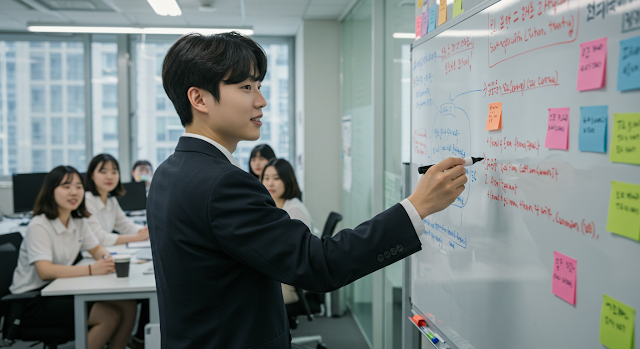
Stories about Generation Z workers in Korea have become almost legendary in offices, often painting them as unprofessional or difficult. Viral social media posts and comedy sketches like SNL Korea’s “MZ Office” exaggerate these images, showing young employees filming TikToks at meetings or refusing extra work outside their contracts. Older generations often complain that Gen Z is defensive and uninterested in traditional work values.
한국의 사무실에서는 Z세대 직원들에 대한 이야기가 전설처럼 퍼지고 있습니다. SNL코리아의 ‘MZ오피스’ 같은 코미디와 바이럴 소셜미디어 게시물은 젊은 직원들이 회의 중 틱톡을 찍거나 계약 외 업무를 거부하는 모습을 과장되게 보여줍니다. 기성세대는 Z세대가 방어적이고 전통적인 직장 문화를 따르지 않는다고 자주 불평합니다.
.jpg "Generation Z in Korean Workplaces")
Beyond the Stereotypes
Despite these portrayals, many Gen Z individuals say their generation is simply trying to adapt and do their best. While some admit that stubbornness exists, most young workers are careful to make a good impression. They acknowledge that speaking up for themselves is more common, but reject the idea that they are all troublemakers.
이러한 이미지와 달리, 많은 Z세대는 그저 자신들의 방식대로 최선을 다할 뿐이라고 말합니다. 일부는 고집스러운 면이 있다고 인정하지만, 대부분은 좋은 인상을 남기기 위해 신경을 씁니다. 자기 목소리를 내는 것이 더 보편적일 뿐, 모두가 문제아는 아니라는 점을 강조합니다.
.jpg "Generation Z in Korean Workplaces")
Shaped by History and Economy
Experts say Gen Z’s attitudes are shaped by Korea’s recent economic history. Growing up during the financial crises of 1997 and 2008, they witnessed job insecurity and the collapse of traditional promises like lifetime employment. What older generations see as selfishness is often self-preservation, as Gen Z knows that loyalty to a company does not guarantee stability.
전문가들은 Z세대의 태도가 한국의 최근 경제 역사에 의해 형성되었다고 설명합니다. 1997년과 2008년의 금융위기 속에서 성장한 이들은 고용 불안과 평생직장 신화의 붕괴를 목격했습니다. 기성세대가 이기적으로 보는 모습은 사실 자기 보호이며, 회사에 대한 충성이 안정으로 이어지지 않는다는 것을 잘 알고 있습니다.
.jpg "Generation Z in Korean Workplaces")
The First True Digital Natives
Gen Z in Korea are the first generation to grow up entirely with smartphones and social media. Unlike Millennials, who experienced the rise of mobile tech, Gen Z has always lived in a connected world. This digital fluency means they are not just consumers but also creators, using apps for self-development and time management. Studies show they are motivated by self-exploration and achievement, challenging the stereotype of laziness.
한국의 Z세대는 스마트폰과 소셜미디어와 함께 자란 첫 세대입니다. 밀레니얼 세대가 모바일 기술의 등장을 경험했다면, Z세대는 항상 연결된 세상에서 살아왔습니다. 이들은 단순한 소비자가 아니라 창작자이기도 하며, 자기계발과 시간관리를 위해 다양한 앱을 적극 활용합니다. 연구에 따르면 이들은 게으름이 아니라 자기 탐구와 성취욕으로 움직입니다.
.jpg "Generation Z in Korean Workplaces")
Generational Tension is Nothing New
Complaints about young workers are not unique to Gen Z. Every generation in Korea has faced criticism from their elders, from Gen X to Millennials. These patterns repeat as each group gains influence. Experts say such myths arise when generations do not interact closely, leading to misunderstandings and nostalgia for the past.
젊은 세대에 대한 불만은 Z세대만의 문제가 아닙니다. X세대, 밀레니얼 세대 모두 기성세대로부터 비슷한 비판을 받았습니다. 세대가 바뀔 때마다 이런 패턴이 반복됩니다. 전문가들은 세대 간 교류가 부족할 때 오해와 과거에 대한 향수가 생긴다고 설명합니다.
.jpg "Generation Z in Korean Workplaces")
Toward a New Workplace Culture
Despite the tension, many Gen Z employees are praised for their preparation and competence. Their individualism is a global trend, not just a Korean issue. Experts suggest that workplaces should adapt, valuing individual motivation over strict group conformity. New leadership styles that embrace diversity and digital skills are needed for the future.
이런 갈등에도 불구하고, 많은 Z세대 직원들은 준비성과 역량을 인정받고 있습니다. 개인주의는 세계적인 흐름이며, 한국만의 현상이 아닙니다. 전문가들은 조직이 변화에 적응해야 하며, 집단 일치보다 개인의 동기 부여를 중시하는 새로운 리더십이 필요하다고 강조합니다.
.jpg "Generation Z in Korean Workplaces")