
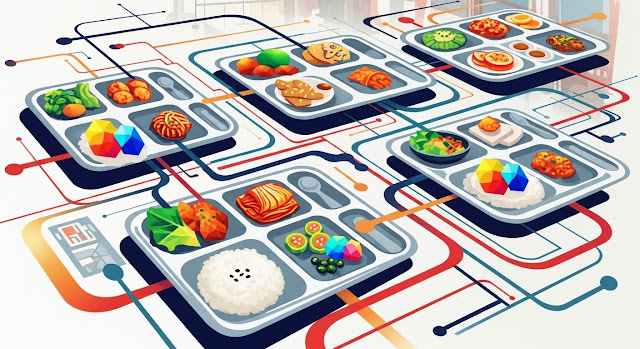
Why Korean School Lunch Systems Are Taking Over the World
Ever wonder why Korean lunch is getting global attention? From humble beginnings to international expansion, Korea’s meal service industry has become a surprising success story that’s capturing worldwide interest.
한국의 급식이 세계적인 주목을 받는 이유가 궁금하신가요? 보잘것없던 시작에서 국제적 확장까지, 한국의 단체 급식 산업은 전 세계의 관심을 끌고 있는 놀라운 성공 스토리가 되었습니다.
.jpg "Korean School Lunch")
From Poverty to Premium: The Transformation Journey
Korea was once among the world’s poorest nations. After the Korean War, the country relied on U.S. corn flour aid distributed through UNICEF. Students received basic cornmeal bread – a symbol of poverty rather than nourishment. This humble beginning shaped what would become one of the world’s most advanced meal service systems.
한국은 한때 세계에서 가장 가난한 나라 중 하나였습니다. 한국전쟁 이후, 우리나라는 유니세프를 통해 배급된 미국의 옥수수 가루 지원에 의존했습니다. 학생들은 기본적인 옥수수빵을 받았는데, 이것은 영양이 아닌 빈곤의 상징이었습니다. 이러한 보잘것없던 시작이 세계에서 가장 발전된 급식 시스템 중 하나로 성장하는 기반이 되었습니다.
The 1977 Crisis That Changed Everything
A massive food poisoning incident in 1977 affected 7,800 students who consumed contaminated cream bread. One student nearly died. This tragedy triggered strict regulations and the “School Meal Service Act” of 1981, establishing rigorous safety standards that would define Korea’s approach to institutional food service.
1977년 대규모 식중독 사건으로 오염된 크림빵을 먹은 7,800명의 학생들이 피해를 입었습니다. 한 학생은 거의 사망할 뻔했습니다. 이 비극은 엄격한 규제를 촉발시켰고 1981년 “학교급식법”을 제정하게 했으며, 한국의 단체 급식 서비스 접근 방식을 정의하는 엄격한 안전 기준을 확립했습니다.
.jpg "Korean School Lunch")
The 1990s Revolution: When Quality Became Priority
As dual-income families increased, homemade lunchboxes became impractical. The 1990s marked a turning point when society demanded better. Parents insisted students deserve proper meals. Schools began serving rice with soup and multiple side dishes – a stark contrast to Western frozen meals or simple sandwiches. This “home-style” approach became Korea’s signature.
맞벌이 가정이 증가하면서 집에서 싸온 도시락은 비현실적이 되었습니다. 1990년대는 사회가 더 나은 것을 요구하면서 전환점이 되었습니다. 학부모들은 학생들이 제대로 된 식사를 받아야 한다고 주장했습니다. 학교는 밥과 국, 여러 가지 반찬을 제공하기 시작했는데, 이는 서양의 냉동 식품이나 간단한 샌드위치와는 극명한 대조를 이뤘습니다. 이러한 “집밥형” 접근 방식이 한국의 시그니처가 되었습니다.
Corporate Lunch Wars: The Big Players Emerge
Major corporations like “Samsung Welstory”, “Ourhome”, and “Hyundai Green Food” entered the institutional food service market in the 1980s. They recognized quality meals as powerful internal marketing tools that boost employee morale and company pride. Surviving the 1997 financial crisis, these giants now control 80% of Korea’s institutional food market.
“삼성웰스토리”, “아워홈”, “현대그린푸드”와 같은 주요 기업들이 1980년대에 단체 급식 시장에 진출했습니다. 이들은 양질의 식사가 직원 사기와 회사 자부심을 높이는 강력한 내부 마케팅 도구라는 것을 인식했습니다. 1997년 외환위기에서 살아남은 이 거대 기업들은 현재 한국 단체 급식 시장의 80%를 장악하고 있습니다.
.jpg "Korean School Lunch")
Going Global: Korea’s Lunch Diplomacy
Korean meal service companies have increased overseas sales by over 30% in just four years. Vietnamese workers wait excitedly for Korean dishes like tteokbokki and mandu. Global corporations are requesting Korean-style meal services. What started as poverty relief has evolved into a premium export transforming workplace cultures worldwide.
한국의 급식 기업들은 단 4년 만에 해외 매출을 30% 이상 증가시켰습니다. 베트남 근로자들은 떡볶이와 만두 같은 한국 음식을 기대하며 기다립니다. 글로벌 기업들이 한국식 급식 서비스를 요청하고 있습니다. 빈곤 구호로 시작했던 것이 전 세계 직장 문화를 변화시키는 프리미엄 수출 상품으로 진화했습니다.
The Secret Ingredient: Cultural Values
Korea’s lunch success stems from “bapsim” – the cultural belief that proper meals fuel life. Strict nutritional calculations, dedicated nutritionists, fresh ingredients over frozen foods, and mandatory cooking facilities set Korean standards apart. When lunch quality matters to national pride, excellence becomes inevitable.
한국 급식의 성공 비결은 “밥심”에서 나옵니다 – 제대로 된 식사가 삶을 이끈다는 문화적 믿음입니다. 엄격한 영양 계산, 전담 영양사, 냉동 식품 대신 신선한 식재료, 필수 조리 시설 등이 한국 기준을 차별화합니다. 급식의 질이 국가적 자부심의 문제가 되면, 탁월함은 필연적이 됩니다.