
From Ghost Stories to K-pop: The Rise of the Saja Boys
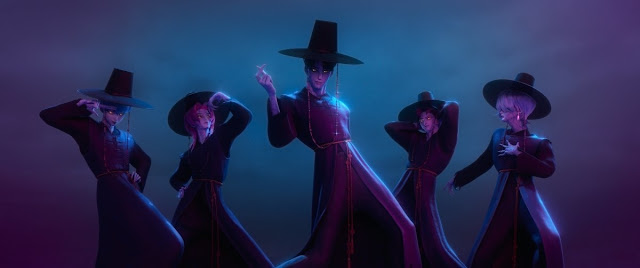
The recent debut of the “Saja Boys,” a fictional K-pop group from the Netflix animated film “K-pop Demon Hunters,” has sparked widespread recognition and discussion among Korean viewers. Their striking appearance—floor-length black hanbok, wide-brimmed hats, and pale, painted faces—immediately evokes the image of the “jeoseung saja,” the traditional Korean Grim Reaper. For many Koreans, this look is not just a fashion statement but a powerful cultural symbol deeply rooted in folklore and ghost stories.
최근 넷플릭스 애니메이션 “K-pop Demon Hunters”에서 등장한 가상의 K-pop 그룹 “Saja Boys”는 한국 시청자들 사이에서 큰 화제를 모으고 있다. 이들의 검은색 한복과 넓은 챙의 모자, 창백한 얼굴은 단순한 스타일이 아니라 한국 전통 설화와 귀신 이야기에서 유래한 “저승사자”를 연상시킨다. 많은 한국인들에게 이 모습은 단순한 패션이 아니라 깊은 문화적 상징이다.
The Jeoseung Saja: A Familiar Yet Haunting Figure
The image of the jeoseung saja—a pale-faced man draped in black robes and wearing a “gat,” a traditional Korean hat—has long signaled death in Korean storytelling. This visual motif is instantly recognizable and carries a chilling presence. The Saja Boys’ stagewear is a modern reinterpretation of this age-old figure, blending traditional elements with the global appeal of K-pop.
저승사자는 검은색 도포와 갓을 쓴 창백한 남성의 모습으로 오랜 세월 한국인들에게 죽음을 상징하는 존재였다. 이 비주얼은 누구나 한 번쯤 본 적이 있을 만큼 익숙하면서도 오싹한 분위기를 자아낸다. “Saja Boys”의 무대 의상은 이러한 전통적 이미지를 현대적으로 재해석해 K-pop의 글로벌 매력과 결합시켰다.
.jpg "The Saja Boys and the Evolution of Korea’s Grim Reaper in Pop Culture")
Grim Reapers in Modern Media: From Fear to Fascination
The transformation of the grim reaper from a figure of fear to a pop culture icon is not new. In recent years, the jeoseung saja has been reimagined in various forms of Korean media. For example, on the dance competition show “World of Street Woman Fighter,” the crew Bumsup performed in black shirts and “gat,” channeling the eerie energy of the reaper. In the 2016 hit drama “Guardian: The Lonely and Great God,” actor Lee Dong-wook portrayed a modern grim reaper, trading traditional robes for a sleek black suit and fedora, yet retaining the character’s symbolic weight.
저승사자가 두려움의 대상에서 대중문화의 아이콘으로 변모한 것은 최근의 일만은 아니다. 최근 몇 년간 저승사자는 다양한 한국 미디어에서 재해석되어 왔다. 예를 들어, “스트릿 우먼 파이터”에서 범썹 크루는 검은 셔츠와 갓을 착용해 저승사자의 오싹한 분위기를 무대 위에 재현했다. 2016년 인기 드라마 “도깨비”에서는 이동욱이 현대적인 저승사자로 분해, 전통 도포 대신 세련된 정장과 페도라를 착용했지만 상징성은 그대로 유지했다.
The Origins and Evolution of the Jeoseung Saja
The iconic image of the jeoseung saja as we know it today can be traced back to a 1980 episode of the KBS series “Legend of the Hometown.” The producers aimed to create a distinctly Korean image of death, dressing the reaper in black robes with a pale face and black lips to symbolize darkness and the unknown. However, the grim reaper’s appearance has not always been so somber. According to the Encyclopedia of Korean Culture, the original jeoseung saja appeared in shamanistic rituals as a military officer, often depicted in bright red armor during the Joseon era.
오늘날 우리가 알고 있는 저승사자의 상징적 이미지는 1980년 KBS “전설의 고향” 한 에피소드에서 시작됐다. 제작진은 죽음의 어두움을 상징하기 위해 검은 도포와 창백한 얼굴, 새까만 입술로 저승사자를 표현했다. 하지만 저승사자의 외형은 항상 어두웠던 것은 아니다. 한국민족문화대백과에 따르면, 원래 저승사자는 무관의 모습으로 무속 의식에 등장했고, 조선시대 그림에서는 붉은 갑옷을 입은 모습으로 그려지기도 했다.
.jpg "The Saja Boys and the Evolution of Korea’s Grim Reaper in Pop Culture")
The Role of the Grim Reaper in Korean Rituals and Beliefs
Despite his fearsome role as a taker of souls, the jeoseung saja was not treated with hostility in traditional Korean funerary rites. Instead, he was regarded with solemn respect, as he served as a guide for the deceased on their journey to the afterlife. Families would carefully perform rituals and offer food and gifts to ensure the reaper’s favor, believing that mistreating him could bring misfortune.
저승사자는 영혼을 데려가는 무서운 존재였지만, 전통 장례의식에서는 적대적으로 대하지 않았다. 오히려 망자의 저승길을 인도하는 안내자로서 경건하게 대우했다. 가족들은 저승사자의 환심을 사기 위해 정성스럽게 제사를 올리고 음식을 올렸으며, 그를 홀대하면 불운이 닥친다고 믿었다.
The Number of Reapers: From Tradition to Modern Storytelling
The number of grim reapers varies between tradition and popular culture. In “K-pop Demon Hunters,” there are five Saja Boys, while in many dramas and films, the jeoseung saja is often portrayed as a solitary figure. However, in Korean shamanism, the traditional number is three. During funerary rituals, families prepare three bowls of rice, three pairs of straw shoes, and three sets of utensils to honor the three reapers believed to guide the soul to the afterlife. This motif has also influenced modern works like the film “Along with the Gods: The Two Worlds,” where three reapers work as a team.
저승사자의 수는 전통과 현대 작품마다 다르게 나타난다. “K-pop Demon Hunters”에서는 다섯 명의 Saja Boys가 등장하지만, 많은 드라마와 영화에서는 저승사자가 혼자 등장한다. 반면, 한국 무속에서는 전통적으로 세 명의 저승사자가 있다고 여겼다. 장례의식에서는 세 그릇의 밥, 세 켤레의 짚신, 세 벌의 수저를 차려 저승사자 세 명을 모셨다. 이 전통은 “신과 함께: 죄와 벌” 같은 현대 영화에도 영향을 미쳤다.
.jpg "The Saja Boys and the Evolution of Korea’s Grim Reaper in Pop Culture")
The Enduring Allure of the Jeoseung Saja
The jeoseung saja continues to captivate audiences, not just as a symbol of death, but as a complex figure who bridges the worlds of the living and the dead. Through reinterpretations in music, television, and film, the grim reaper has become both a cultural icon and a mirror reflecting Korea’s evolving attitudes toward mortality, tradition, and modernity. The Saja Boys are the latest in a long line of reimagined reapers, demonstrating how ancient symbols can find new life and relevance in today’s pop culture landscape.
저승사자는 단순한 죽음의 상징을 넘어, 삶과 죽음의 경계를 잇는 복합적인 존재로 여전히 대중의 관심을 받고 있다. 음악, 드라마, 영화에서의 재해석을 통해 저승사자는 한국인의 죽음과 전통, 현대성에 대한 태도를 비추는 문화적 아이콘이 됐다. “Saja Boys”는 이러한 재해석의 최신 사례로, 오래된 상징이 현대 대중문화에서 어떻게 새롭게 살아날 수 있는지를 보여준다.