
Embracing AI and Real-World Relevance
Why Math Education Reform Is Essential for the AI Era
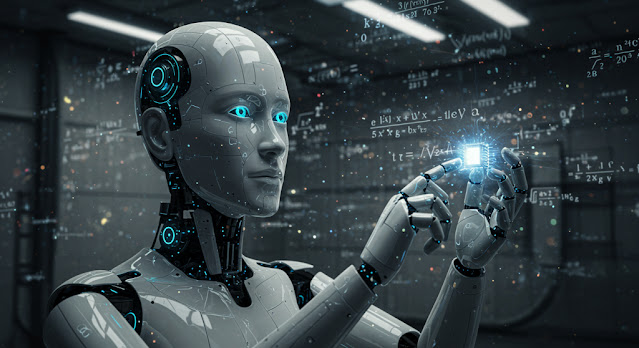
In our modern society, artificial intelligence is everywhere, quietly reshaping how we live and work. At the heart of this revolution is mathematics—not just the math memorized for exams, but the deep ideas that make AI possible, such as understanding patterns, spatial relationships, and optimization.
오늘날 인공지능이 우리 사회 전반에 도입되고 있습니다. 이 변화의 중심에는 단순 암기형 수학이 아니라, 인공지능의 기반이 되는 깊이 있는 수학적 사고가 있습니다. 패턴 인식, 공간적 관계, 최적화 등과 같은 수학적 개념이 AI를 가능하게 하는 핵심입니다.
The Hidden Mathematics Behind Artificial Intelligence
The success of AI relies on tools like vectors and matrices, which manage enormous amounts of data and enable computers to recognize similarities and differences. Core algorithms such as gradient descent automate complex calculations and drive machine learning. Stripping away the code, it’s clear that AI is, in essence, advanced mathematics at work behind the scenes.
인공지능의 성공에는 벡터와 행렬 같은 도구가 필수적입니다. 이들은 방대한 데이터를 다루고, 유사성과 차이를 인식하게 해줍니다. 그래디언트 하강법 같은 알고리즘은 복잡한 계산을 자동화하며 머신러닝을 움직이게 합니다. 본질적으로 인공지능은 수학의 힘이 숨어 있는 기술입니다.

Transforming Korean Math Curriculum: The Introduction of ‘AI Mathematics’
Recognizing the centrality of mathematics in AI, Korean educators recently introduced a new high school subject called ‘AI Mathematics’. This sparked a surge of interest—adults returned to evening math programs, and teachers around the world requested new textbooks. The underlying realization was universal: traditional, test-driven math education does not prepare students for real-world problem solving.
한국에서는 인공지능과 수학의 긴밀한 관계를 인식하고, 최근 고등학교 과목에 ‘AI 수학’을 도입했습니다. 이 변화로 인해 어른들도 야간 수학 강좌에 참여하기 시작하고, 해외에서도 교재 요청이 이어졌습니다. 이전의 암기 위주의 교육 방식으로는 실질적인 문제 해결 능력을 기르기 어렵다는 점이 공감대를 이루었습니다.
Problems Within the Current Education System
Despite these positive steps, significant problems remain. Recent curriculum reforms have removed topics such as vectors and matrices from high school math, claiming they were ‘too difficult’. However, the core issue lies not in the content’s difficulty but in the speed-focused, test-centric educational culture. Students are taught to memorize shortcuts rather than deeply understand and apply concepts, leading to confusion and stress in higher education and beyond.
이러한 긍정적인 변화에도 불구하고 현행 교육 시스템에는 여전히 많은 문제가 존재합니다. 최근 교육과정 개편으로 고등학교 수학에서 벡터와 행렬과 같은 주제가 ‘너무 어렵다’는 이유로 빠졌습니다. 하지만 진짜 문제는 난이도가 아니라, 빠른 시간 내에 정답을 맞추는 데 집중하는 시험 위주의 문화입니다. 학생들은 개념의 깊은 이해 대신 암기와 꼼수를 익혀, 대학 진학 이후 더 큰 혼란과 스트레스를 겪게 됩니다.
.webp "AI mathematics")
The Need for Differentiated and Real-World-Focused Assessment
Current college entrance exams promote a ‘one-size-fits-all’ approach, forcing all students to solve similar math problems regardless of their future paths. There is an urgent need for assessment systems that reflect the mathematical skills required in various academic and professional fields, promoting both depth and flexibility.
현재의 대학 입시 제도는 모든 학생들에게 동일한 유형의 수학 문제를 풀도록 강요하고 있습니다. 실제로 각 분야에서 요구하는 수학적 역량은 다르기 때문에, 보다 다양하고 유연한 평가 기준이 필요합니다. 이를 통해 학생들은 자신의 진로에 맞는 수학적 사고력과 문제 해결 능력을 기를 수 있습니다.
Rethinking Math Teacher Training
Another key area for reform is math teacher certification. Traditional exams focus heavily on theoretical knowledge, with less emphasis on real-world applications and teaching skills. Improving teacher preparation should involve more practical experience, as well as critical reflection on the broader role of math in society.
수학교사 자격 검정도 개혁이 필요합니다. 기존의 시험은 이론적 지식에 치중되어 있으며, 실제 현장에서의 적용과 교육 역량에 대한 평가가 부족합니다. 교사 양성 과정에는 실제 수업 경험과 함께, 수학이 사회에 미치는 영향에 대한 비판적 성찰도 포함되어야 합니다.
.webp "AI mathematics")
Supporting Teachers and Building Coherent Curricula
While the math curriculum itself covers essential topics, the intense competition for university admissions distorts how math is taught and learned. Inconsistencies between elementary, middle, and high school math further hinder continuous progress. Teacher education should focus on bridging these gaps and preparing educators to guide students through open-ended, real-life problems.
수학 교육과정은 중요한 내용을 담고 있지만, 대학입시 경쟁이 지나치게 치열하다 보니 수학 수업의 목적이 왜곡되고 있습니다. 또한, 초·중·고 각 단계의 수학 내용 연결이 잘 이뤄지지 않아 학생들이 일관성 있게 학습하기 어렵습니다. 교사 양성 프로그램은 이러한 단절을 해소하고, 실생활과 연결된 문제 해결 교육까지 이끌 능력을 키워야 합니다.
Toward a Humanistic and Inspiring Mathematics Education
Ultimately, math education in the AI era must move beyond test preparation. It should become a source of wonder and active engagement—a discipline that inspires creativity, enriches culture, and deepens scientific understanding. When math is experienced as a deeply human endeavor, students will be better prepared to face the future shaped by artificial intelligence.
결국 인공지능 시대의 수학교육은 단순한 입시 대비용이 아니라, 스스로 생각하고 탐구하는 즐거움을 주어야 합니다. 창의력과 문화, 그리고 과학적 이해를 폭넓게 키울 수 있어야 하며, 수학을 통해 새로운 미래를 이끌어갈 힘을 기를 수 있습니다. 수학을 인간적인 탐구의 장으로 재조명하고자 할 때, 학생들은 변화하는 사회를 주도하는 인재로 성장할 것입니다.
.webp "AI mathematics")
Conclusion: The Path Forward for Math Education Reform
Reforming math education is an urgent priority in Korea’s rapidly evolving society. Embracing approaches centered on AI, real-world problem solving, teacher empowerment, and differentiated assessments will transform math from a stress-inducing subject into a powerful tool for understanding and shaping our world.
수학교육의 개혁은 변화하는 사회 속에서 반드시 이루어져야 할 과제입니다. 인공지능 활용, 실제 문제 해결, 교사 역량 강화, 맞춤형 평가 등의 방향으로 나아간다면, 수학은 더 이상 두려운 과목이 아니라, 세상을 변화시키는 힘이 되는 학문이 될 것입니다.