
Why This Exit Feels Bigger Than One Awards Show
More Than a Submission Decision
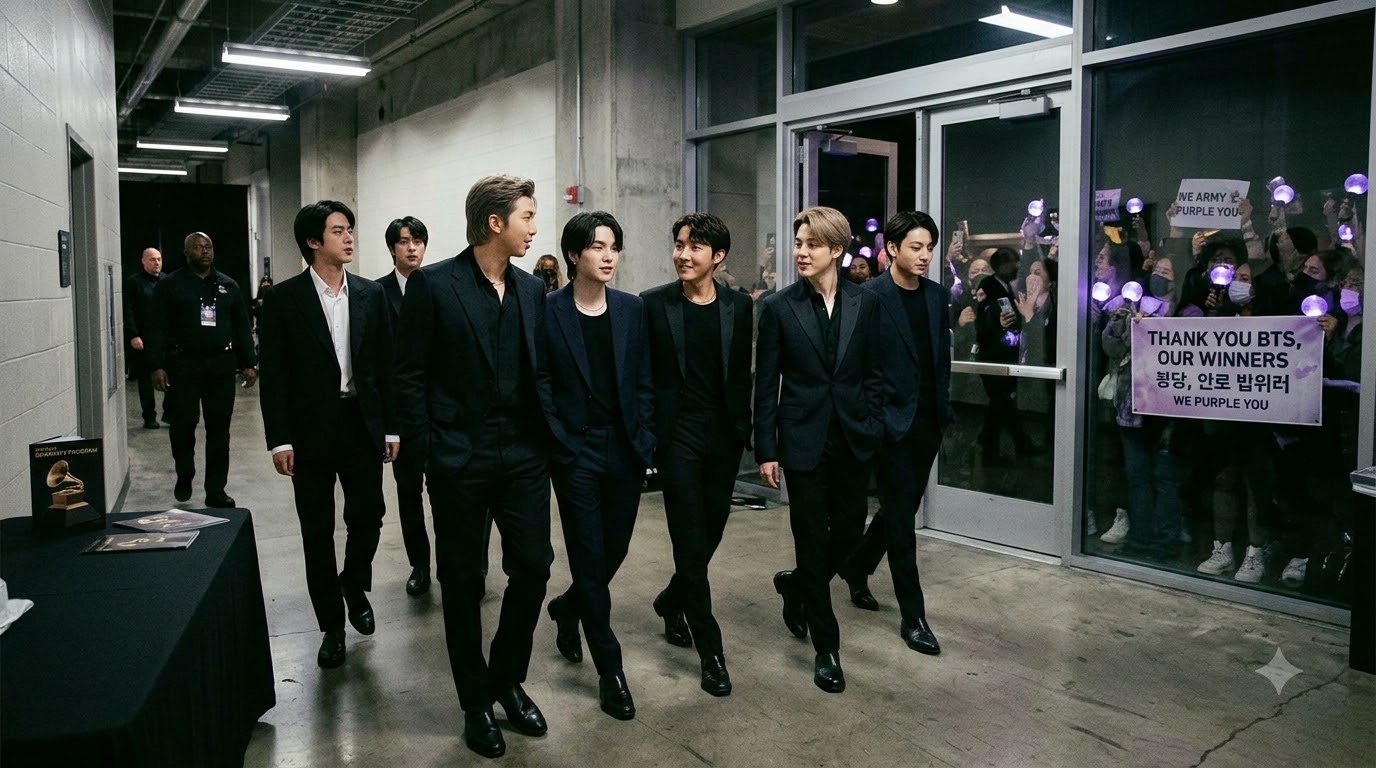
When BTS announced they would not submit their music to next year’s Grammys, fans reacted instantly. But this was not just another fandom moment or a simple scheduling choice. For many people, it felt like a symbolic rejection of the Recording Academy’s authority. The timing made that interpretation even stronger, especially as debate grew around the Grammys’ new best Asian pop music performance category.
BTS가 내년 그래미에 음악을 출품하지 않겠다고 밝히자 팬들은 즉각 반응했습니다. 하지만 이번 결정은 단순한 팬덤 이슈나 일정상의 선택처럼 보이지 않았습니다. 많은 사람들에게 이것은 레코딩 아카데미의 권위 자체를 상징적으로 거부하는 행위처럼 느껴졌습니다. 특히 새로 만들어진 ‘Best Asian Pop Music Performance’ 부문을 둘러싼 논쟁이 커지던 시점과 맞물리면서, 그 해석은 더욱 강해졌습니다.

Why the New Category Feels So Controversial
Critics argue that the new Asian pop category risks creating a separate lane for artists like BTS rather than allowing them to compete fully in broader pop fields. Since one song can be entered in only one performance category, choosing the new award could mean losing a chance at best pop duo/group performance — the category where BTS had already been nominated three times. That is why many fans saw the move not as inclusion, but as containment.
비판하는 사람들은 새 아시아 팝 부문이 BTS 같은 아티스트를 더 넓은 팝 경쟁 안에서 평가하는 대신, 따로 분리된 트랙으로 보내는 결과가 될 수 있다고 봅니다. 한 곡은 한 해에 하나의 퍼포먼스 부문에만 출품할 수 있기 때문에, 새 부문을 선택하면 기존의 베스트 팝 듀오/그룹 퍼포먼스 부문 기회를 잃게 될 수도 있습니다. 그렇기 때문에 많은 팬들은 이것을 포용이 아니라 분리와 고립의 방식으로 받아들였습니다.
Authority Exists Only If People Accept It
This is where the discussion becomes much bigger than BTS alone. Professor “Hong Seok-kyeong” framed the boycott as a withdrawal of consent. In her view, awards do not hold power by force. They hold power because artists and audiences agree to recognize that power. If a global act like BTS no longer sees the institution as meaningful or fair, the institution’s authority begins to crack. That is a serious cultural moment.
바로 이 지점에서 논의는 BTS 개인의 선택을 넘어 훨씬 더 커집니다. “홍석경” 교수는 이번 보이콧을 ‘동의의 철회’로 해석했습니다. 그의 관점에서 상은 강제로 권위를 가지는 것이 아닙니다. 아티스트와 대중이 그 권위를 인정하기 때문에 권위가 유지되는 것입니다. 만약 BTS처럼 세계적인 아티스트가 더 이상 그 제도를 의미 있거나 공정하다고 느끼지 않는다면, 그 제도의 권위에는 균열이 생기기 시작합니다. 이는 매우 중요한 문화적 순간입니다.

The Grammys vs. the Data Era
The debate also exposes a bigger clash between two systems of recognition. The Grammys rely on peer voting, legacy and institutional history. But newer K-pop models like “Fanomenon” are moving toward data, measurable fan engagement and platform-based transparency. One model says experts decide excellence. The other says audience activity reveals it. Neither approach is perfect, but the conflict shows that music recognition is entering a new era.
이번 논쟁은 인정의 기준을 둘러싼 두 시스템의 충돌도 드러냅니다. 그래미는 동료 업계 투표와 오랜 역사, 제도적 권위에 기대고 있습니다. 반면 “Fanomenon” 같은 새로운 K-pop형 시상 구조는 데이터와 팬 활동, 플랫폼 기반의 투명성 쪽으로 움직이고 있습니다. 하나는 전문가가 우수성을 판단한다고 말하고, 다른 하나는 대중의 활동이 그것을 보여준다고 말합니다. 어느 쪽도 완벽하지 않지만, 이 갈등은 음악적 인정의 방식이 새로운 시대로 넘어가고 있음을 보여줍니다.
Why This Moment Will Be Remembered
In the end, BTS’ exit matters because it reveals that even a 70-year-old institution cannot rely on history alone. Like in “The Emperor’s New Clothes,” authority looks stable until people stop pretending it is unquestionable. Whether you agree with BTS or not, the message is clear: in global music today, legitimacy has to be renewed continuously. It cannot simply be inherited forever.
결국 BTS의 이번 선택이 중요한 이유는 70년 가까운 역사를 가진 제도조차 과거의 권위만으로는 유지될 수 없다는 사실을 보여주기 때문입니다. “The Emperor’s New Clothes”처럼 권위는 모두가 의심하지 않기로 할 때는 안정적으로 보이지만, 그 전제가 흔들리는 순간 전혀 다른 모습이 드러납니다. BTS의 판단에 동의하든 그렇지 않든, 메시지는 분명합니다. 오늘날의 글로벌 음악 시장에서 정당성은 계속해서 새롭게 입증되어야 하며, 영원히 자동으로 상속되는 것이 아니라는 점입니다.