
Why Bandwidth Is Becoming a National Security Issue
A Costly Upgrade Still Left a Serious Gap
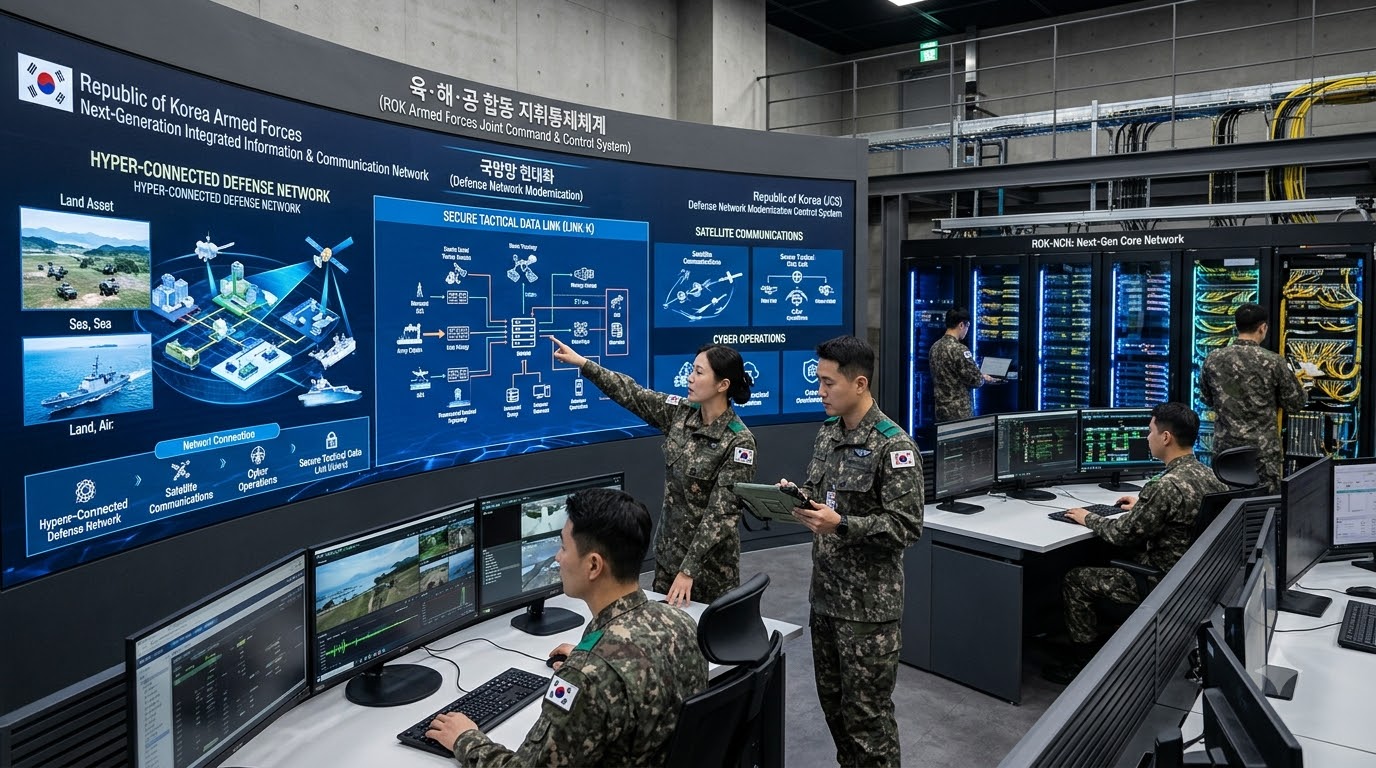
South Korea’s military is now reworking its own broadband system, and the reason is surprisingly basic: not enough bandwidth where it matters most. This is striking because the Military Broadband Convergence Network had already gone through a massive upgrade completed in 2024, with a price tag of around 600 billion won. The expectation was that the next-generation network would support command systems, administration and newer technologies like AI and drones. But reality turned out to be much more uneven.
한국군이 군 전용 광대역 통신망을 다시 손보려 하고 있습니다. 이유는 의외로 단순합니다. 필요한 곳에서 대역폭이 충분하지 않았기 때문입니다. 이는 2024년에 약 6천억 원을 들여 대규모 업그레이드를 마친 직후라는 점에서 더욱 눈에 띕니다. 차세대 군 광대역 융합망은 지휘통제와 행정 업무는 물론, AI와 드론 같은 신기술까지 지원할 것으로 기대되었습니다. 하지만 실제 운영에서는 훨씬 더 불균형한 현실이 드러났습니다.

Why the Network Fell Short
The core problem seems to be that bandwidth was distributed too broadly and too uniformly. Different units vary hugely in size, role and traffic demand, but the allocation process did not fully reflect those differences. As a result, some units ended up facing shortages, while some existing communications equipment could not even handle the assigned capacity. In other words, the network may have been bigger, but it was not smart enough.
핵심 문제는 대역폭이 지나치게 넓고 획일적으로 배분되었다는 점으로 보입니다. 군 부대는 규모와 임무, 실제 데이터 수요가 매우 다르지만, 이번 배분 과정에서는 이런 차이가 충분히 반영되지 않았습니다. 그 결과 일부 부대에서는 대역폭 부족이 발생했고, 어떤 곳에서는 기존 통신 장비가 배정된 용량 자체를 제대로 감당하지 못했습니다. 다시 말해 네트워크는 더 커졌을지 모르지만, 충분히 똑똑하게 설계되지는 못했던 것입니다.
Why This Matters More in the AI Era
This is not just a technical inconvenience. It directly affects military readiness. Korea’s armed forces are increasingly relying on AI-enabled systems, drones and crewed-uncrewed teaming technologies. These systems do not simply require more connectivity. They require stable, responsive and adaptable network capacity. If communications lag or fail, the military cannot fully use the advanced tools it is investing in. In that sense, bandwidth is becoming as strategic as hardware.
이 문제는 단순한 기술적 불편함을 넘어서 군의 대비태세와 직접 연결됩니다. 한국군은 점점 더 AI 기반 시스템과 드론, 유·무인 복합 전력에 의존하고 있습니다. 이런 시스템은 단순히 연결만 필요로 하는 것이 아니라, 안정적이고 민감하게 반응하며 유연하게 확장될 수 있는 네트워크를 요구합니다. 통신이 지연되거나 끊기면 군이 투자한 첨단 장비를 제대로 활용할 수 없게 됩니다. 그런 의미에서 대역폭은 이제 하드웨어만큼이나 전략적인 요소가 되고 있습니다.

The Next Fix: Smarter, Not Just Bigger
The Defense Ministry now plans to study actual traffic patterns, compare the needs of different unit types and propose more appropriate bandwidth levels. It is also exploring software-defined networking, which would let the military manage traffic and failures more flexibly through software. That signals an important shift. The future solution is not just adding more capacity. It is building a network that can think and adjust in real time.
국방부는 이제 실제 트래픽 흐름을 분석하고, 부대 유형별 통신 수요를 비교한 뒤, 보다 적절한 대역폭 수준을 새롭게 제시할 계획입니다. 또한 소프트웨어 정의 네트워킹 도입도 검토하고 있습니다. 이는 소프트웨어를 통해 트래픽과 장애 상황에 더 유연하게 대응할 수 있게 해주는 방식입니다. 이는 중요한 방향 전환을 의미합니다. 앞으로의 해법은 단순히 더 많은 용량을 추가하는 것이 아니라, 스스로 판단하고 실시간으로 조정할 수 있는 네트워크를 만드는 데 있다는 뜻입니다.
Infrastructure Alone Is Never Enough
The lesson here feels bigger than one military project. Even a well-funded modernization effort can fall short if planning does not match real-world complexity. Like in “The Art of War,” strength is not only about building more, but about understanding where and how force must be used. Korea’s military network overhaul shows that in the age of AI warfare, infrastructure must be not only secure and large, but also flexible, precise and constantly re-evaluated.
이번 사례는 단순히 하나의 군 통신 사업에 그치지 않는 교훈을 줍니다. 충분한 예산이 투입된 현대화 사업이라도 현실의 복잡성을 계획에 담아내지 못하면 기대에 미치지 못할 수 있다는 점입니다. “The Art of War”처럼 진짜 강함은 단순히 더 많이 만드는 데 있는 것이 아니라, 언제 어디서 어떻게 힘을 써야 하는지를 이해하는 데 있습니다. 한국군의 네트워크 개편은 AI 전장의 시대에는 인프라가 단지 안전하고 큰 것만으로는 부족하며, 유연하고 정밀하며 끊임없이 재평가되어야 한다는 사실을 보여주고 있습니다.