
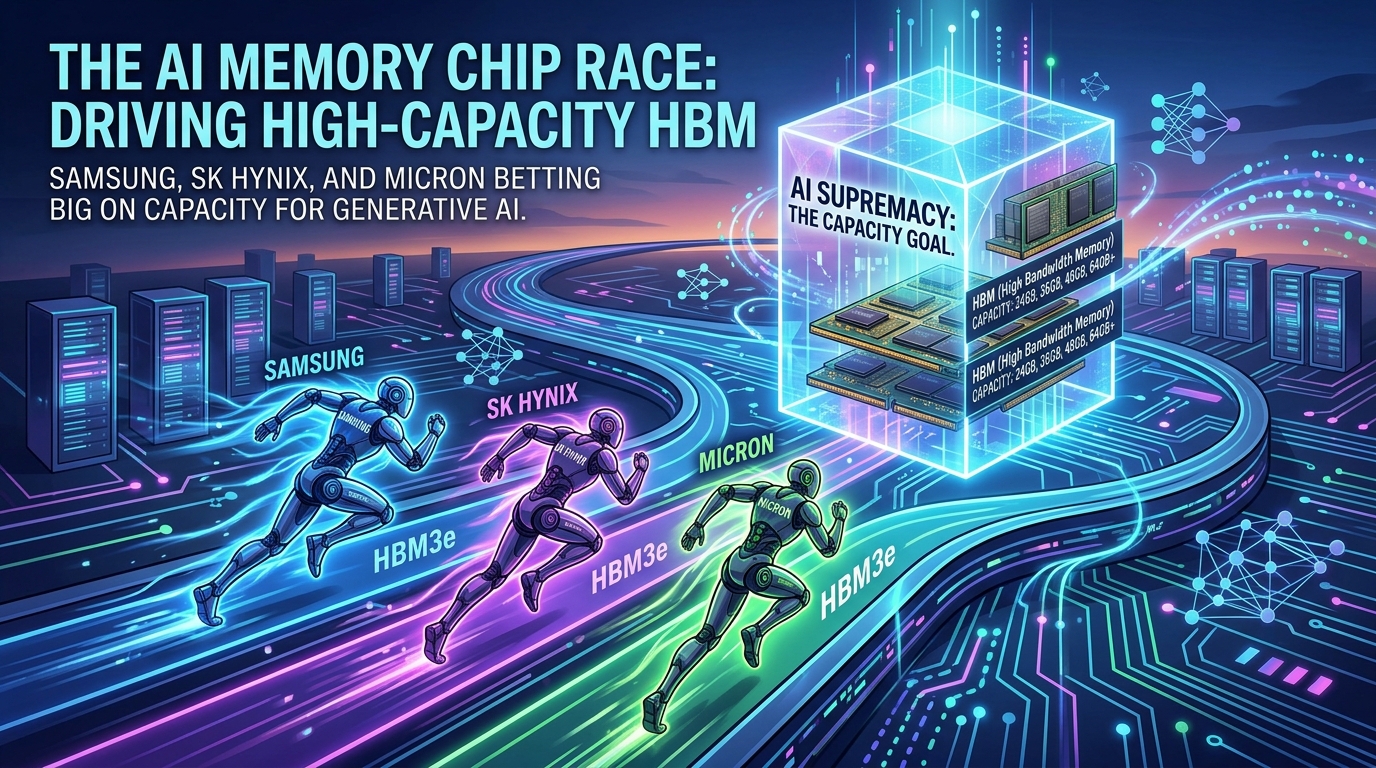
Why Samsung, SK Hynix and Micron Are Betting Big on Capacity
The AI Boom Is Turning Memory Into the Real Bottleneck
The global AI race is no longer just about who has the smartest model. It is also about who has enough memory chips to keep the whole system running. Right now, Samsung Electronics, SK hynix and Micron are moving fast to expand production because demand for AI servers, high-bandwidth memory and DRAM keeps outrunning supply. In this cycle, memory is not a side story. It is one of the main battles.
글로벌 AI 경쟁은 이제 누가 더 똑똑한 모델을 가지느냐의 문제만이 아닙니다. 그 시스템 전체를 움직일 수 있을 만큼 충분한 메모리 칩을 누가 확보하느냐의 문제이기도 합니다. 현재 삼성전자, SK하이닉스, 마이크론은 AI 서버와 고대역폭 메모리, DRAM 수요가 공급을 계속 앞지르면서 생산능력 확대에 속도를 내고 있습니다. 이번 사이클에서 메모리는 주변 이야기가 아니라 핵심 전선 중 하나가 되었습니다.

Why Capacity Matters More Than Price
One of the most important points analysts are making is simple: in memory, supply can matter more than demand headlines. Prices may rise or fall in the short term, but what really shapes the next cycle is how fast new capacity comes online. As “Park Seung-young” argued, investors should watch wafer output, fab construction and packaging capacity more closely than price charts alone. In other words, production speed is becoming the real strategic signal.
전문가들이 특히 강조하는 핵심은 매우 단순합니다. 메모리 산업에서는 단기적인 수요 뉴스보다 공급 확대 속도가 더 중요할 수 있다는 점입니다. 가격은 단기적으로 오르내릴 수 있지만, 다음 사이클을 결정하는 진짜 변수는 새로운 생산능력이 얼마나 빨리 올라오느냐입니다. “박승영”의 말처럼 투자자들은 가격 그래프보다 웨이퍼 생산량, 공장 건설, 패키징 능력을 더 주의 깊게 봐야 합니다. 다시 말해, 생산 속도가 진짜 전략 신호가 되고 있는 것입니다.
Samsung, SK Hynix and Micron Are All Going Bigger
The three memory giants are all scaling hard. Samsung is expanding in Pyeongtaek, Yongin and the Gwangju-South Jeolla area. SK hynix is using funds from its Nasdaq debut to grow wafer output, advanced packaging and EUV capacity. Micron is pushing huge investments in the United States and Japan as part of a broader effort to localize more production. The numbers are enormous, but the message is even clearer: no one wants to be the company that runs out of AI memory capacity first.
세계 3대 메모리 기업은 모두 공격적으로 몸집을 키우고 있습니다. 삼성전자는 평택과 용인, 그리고 광주·전남 권역에서 생산기지를 확대하고 있습니다. SK하이닉스는 나스닥 상장을 통해 확보한 자금을 바탕으로 웨이퍼 생산과 첨단 패키징, EUV 장비 투자를 늘리고 있습니다. 마이크론은 미국과 일본에서 대규모 투자를 진행하며 생산 거점을 더 자국 중심으로 가져가려는 흐름에 올라타고 있습니다. 숫자 자체도 거대하지만, 그보다 더 분명한 메시지는 아무도 AI 메모리 공급에서 먼저 밀려나는 회사가 되고 싶지 않다는 점입니다.

Tight Supply Could Last Longer Than People Think
Even with all this investment, there is one catch: meaningful new capacity is not expected to arrive quickly. Industry watchers say a large part of the additional supply may not come online until the second half of 2027. That means elevated memory prices and tight HBM supply could continue for quite some time. It also explains why customers are already saying even aggressive expansion plans may still not be enough.
이렇게 막대한 투자가 이뤄지고 있음에도 한 가지 중요한 문제가 있습니다. 실제로 의미 있는 신규 생산능력이 시장에 들어오는 속도는 그리 빠르지 않다는 점입니다. 업계에서는 추가 공급의 상당 부분이 2027년 하반기 이후에야 본격적으로 반영될 것으로 보고 있습니다. 이는 메모리 가격이 높은 수준을 유지하고 HBM 공급 부족도 상당 기간 이어질 수 있음을 의미합니다. 고객들이 공격적인 증설 계획조차도 충분하지 않을 것이라고 말하는 이유도 바로 여기에 있습니다.
The Real Risk: Openings for New Rivals
This pressure is also creating room for challengers like China’s CXMT, which is already increasing its market share. Like in “The Art of War,” the long game is not only about strength but timing. If incumbents cannot expand fast enough, new players will find openings. That is why this AI memory race is not just a story about booming demand. It is a story about who can build, scale and deliver first.
이 같은 압박은 중국의 CXMT 같은 후발주자에게도 기회를 만들어주고 있습니다. 실제로 이 회사는 이미 시장점유율을 높이고 있습니다. “The Art of War”처럼 장기전에서는 힘만큼이나 타이밍도 중요합니다. 기존 강자들이 충분히 빠르게 증설하지 못하면 새로운 플레이어가 틈을 파고들 수 있습니다. 그래서 이번 AI 메모리 경쟁은 단순히 수요가 폭증한다는 이야기가 아닙니다. 누가 먼저 짓고, 키우고, 공급할 수 있느냐의 이야기이기도 합니다.