
Seoul Metro Adds English Warnings After Graffiti Vandalism at Subway Depots
Why Seoul Metro Is Changing Its Warning System
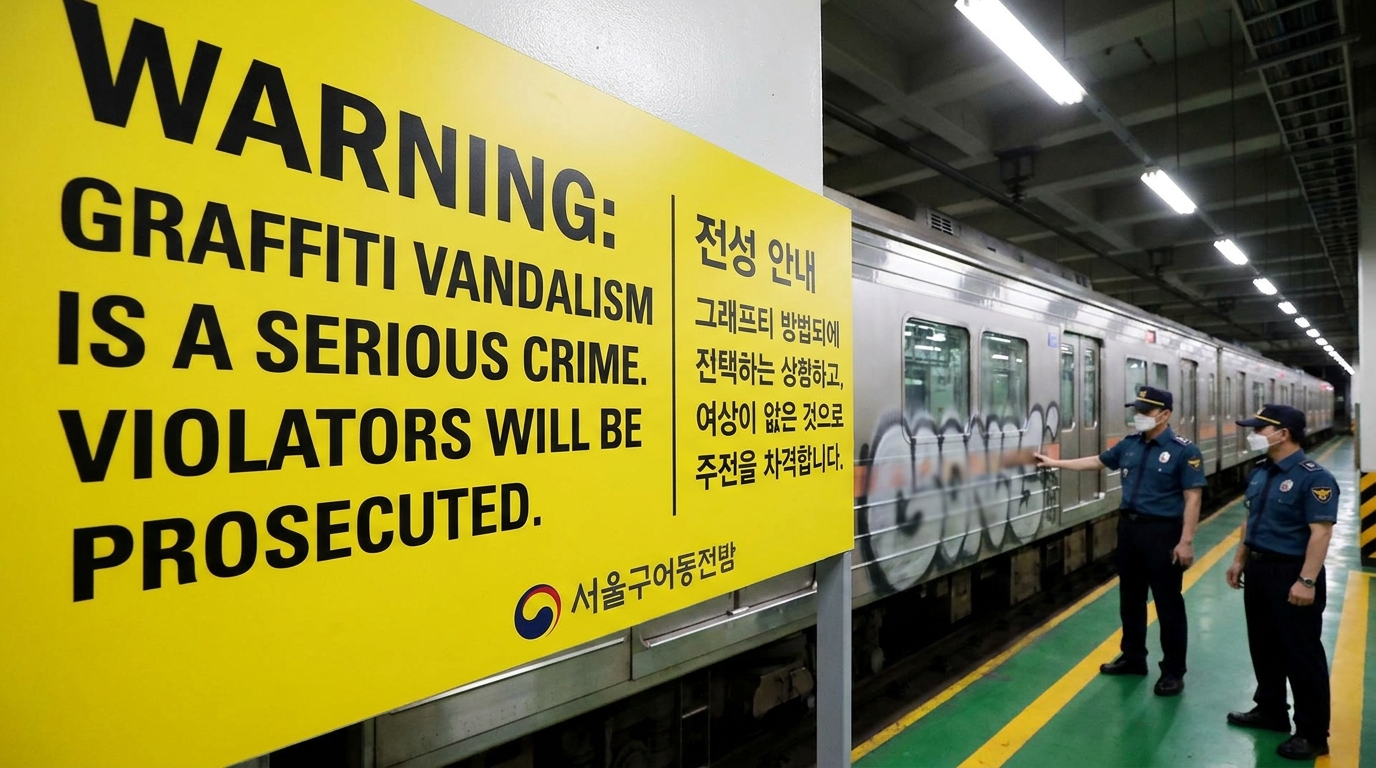
Seoul Metro is tightening security after a series of graffiti vandalism cases involving foreign nationals at subway depots. The company now plans to install standardized warning signs in English around depot fences, hoping to deter trespassing and train defacement before it happens again. This is not just about signs. It reflects growing concern over how quickly intruders can enter, spray-paint trains and leave the country before investigators catch up.
서울메트로가 지하철 차량기지에서 발생한 외국인 관련 그래피티 훼손 사건이 반복되자 보안 대응을 강화하고 있습니다. 이에 따라 차량기지 울타리 주변에 영어 경고문을 표준화해 설치할 계획이라고 밝혔습니다. 목적은 침입과 열차 훼손을 사전에 억제하는 것입니다. 이는 단순히 안내판을 추가하는 문제가 아닙니다. 침입자들이 빠르게 들어와 열차에 스프레이를 뿌린 뒤 수사망이 닿기 전에 출국해버리는 현실에 대한 우려가 커졌기 때문입니다.

A Pattern of Quick Entry and Faster Escape
Officials say the vandalism pattern has been alarmingly similar across multiple incidents. Intruders usually strike in the early morning, scale depot fences, paint parked trains and then flee. In one case, three Russian nationals allegedly entered Gunja depot in 2024, painted a train and boarded a plane to China the very same day. In another recent case, suspects from Australia and Belgium allegedly vandalized a train in Busan before making their way to Incheon Airport and flying out the next morning.
당국에 따르면 여러 사건에서 침입 방식은 놀라울 정도로 비슷했습니다. 침입자들은 대개 새벽 시간대에 움직이며 차량기지 담장을 넘고, 주차된 열차에 그래피티를 남긴 뒤 곧바로 도주합니다. 2024년 군자 차량기지 사건에서는 러시아 국적의 세 명이 열차에 낙서를 한 뒤 당일 중국행 비행기에 탑승한 것으로 조사됐습니다. 최근 부산 사건에서도 호주 국적자와 벨기에 국적자가 열차를 훼손한 뒤 인천공항으로 이동해 다음 날 오전 출국한 것으로 전해졌습니다.
Why English Signs Matter
Seoul Metro says one problem with the old warning boards was inconsistency. Sizes, locations and wording all varied, and some signs no longer reflected updated legal standards. By switching to a clear and uniform English-language design, the company hopes to communicate legal consequences directly to foreign graffiti crews who may not understand Korean notices. This is a practical move aimed at prevention rather than reaction.
서울메트로는 기존 경고판의 문제 중 하나로 일관성 부족을 지적했습니다. 크기와 위치, 문구가 제각각이었고, 일부는 최근 개정된 법적 기준도 제대로 반영하지 못하고 있었다는 것입니다. 영어로 통일된 명확한 디자인을 적용하면 한국어 안내를 이해하지 못할 수 있는 외국인 그래피티 조직에게도 법적 처벌 가능성을 직접 전달할 수 있습니다. 즉, 사후 대응이 아니라 사전 예방을 노린 실용적인 조치라고 볼 수 있습니다.

More Than Vandalism, It’s a Security Issue
Train graffiti may look to some like a property crime, but for operators it is much bigger than that. It damages public assets, disrupts maintenance schedules and raises broader questions about depot security. If people can scale a four-meter wall, enter restricted rail zones and escape within minutes, the issue goes beyond paint. It becomes a question of infrastructure vulnerability in one of the world’s busiest urban transit systems.
열차 그래피티는 겉으로 보기에는 단순한 기물 훼손처럼 보일 수 있지만, 운영 기관 입장에서는 훨씬 더 큰 문제입니다. 공공 자산이 손상되고 유지보수 일정에 차질이 생기며, 무엇보다 차량기지 보안 자체에 대한 질문을 던지게 됩니다. 만약 누군가가 4미터 높이의 담장을 넘고 제한 구역에 침입해 몇 분 만에 도주할 수 있다면, 문제는 단순한 낙서를 넘어서게 됩니다. 세계에서 가장 바쁜 도시 철도 시스템 중 하나에서 기반시설의 취약성을 보여주는 사례가 되는 것입니다.
A Small Sign of a Bigger Urban Challenge
In the end, the new warning signs are a small but symbolic response to a bigger challenge: how global urban spaces deal with fast-moving cross-border behavior. Like in “The Thomas Crown Affair,” style, speed and escape can make the act look cinematic, but the damage is very real. Seoul Metro’s response suggests that even basic communication — if done clearly and consistently — can become part of a smarter city security strategy.
결국 새 경고판은 더 큰 도시적 과제에 대한 작지만 상징적인 대응입니다. 국경을 넘나드는 빠른 행동 양식에 글로벌 도시가 어떻게 대응할 것인가 하는 문제입니다. “The Thomas Crown Affair”처럼 속도와 연출, 도주 방식이 영화처럼 보일 수는 있지만, 실제 피해는 매우 현실적입니다. 서울메트로의 대응은 기본적인 경고 문구조차도 명확하고 일관되게 설계되면 더 똑똑한 도시 보안 전략의 일부가 될 수 있음을 보여줍니다.