
Why Young Adults Are Watching the Debate So Closely
Why This Debate Suddenly Feels Personal
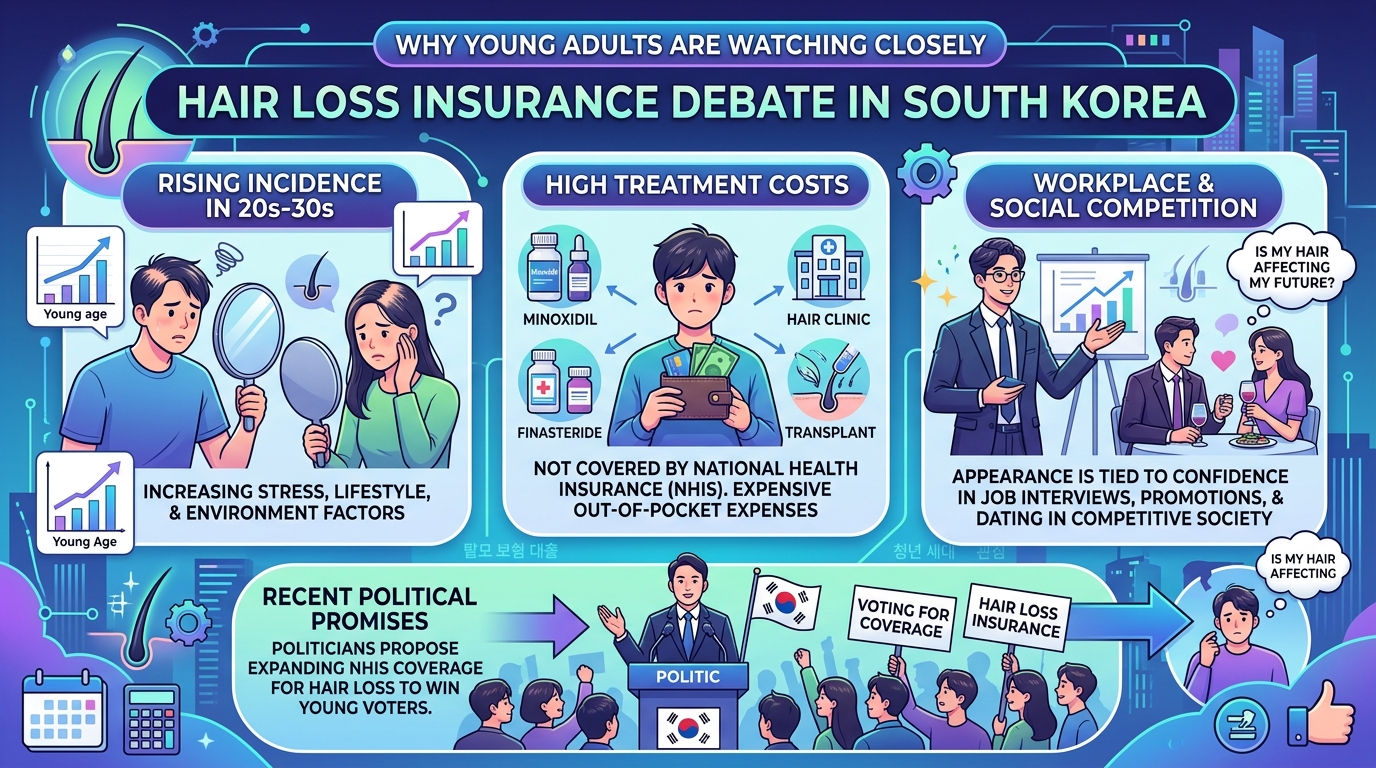
Hair loss used to be treated like a private frustration or a cosmetic problem. But in Korea, it is now becoming a serious public policy issue. Ahead of a government forum on July 4, young adults are paying close attention to whether national health insurance might begin covering certain hair loss treatments. For people in their 20s and early 30s, this is not just about appearance. It is about money, confidence and whether treatment can be seen as a medical need rather than a luxury.
탈모는 오랫동안 개인적인 고민이나 미용상의 문제처럼 취급되어 왔습니다. 그러나 한국에서는 이제 이것이 공공정책의 주요 이슈로 떠오르고 있습니다. 7월 4일 예정된 정부 공론화 논의를 앞두고, 젊은 세대는 건강보험이 일부 탈모 치료를 보장하게 될지 큰 관심을 보이고 있습니다. 20대와 30대 초반에게 이 문제는 단순히 외모의 문제가 아닙니다. 비용의 문제이자 자신감의 문제이며, 치료가 사치가 아닌 의료적 필요로 인정받을 수 있는가의 문제이기도 합니다.

Not All Hair Loss Is the Same
A big part of the discussion is understanding what kind of hair loss the government is actually talking about. Hair loss is broadly divided into alopecia areata and androgenetic alopecia. Alopecia areata is an immune-related condition that causes round bald patches, while androgenetic alopecia is the more familiar pattern hair loss linked to hormones and genetics. The current insurance discussion mainly focuses on medications for androgenetic alopecia, which affects many young adults.
이번 논의에서 중요한 부분은 정부가 어떤 탈모를 대상으로 보고 있는지 이해하는 것입니다. 탈모는 크게 원형탈모와 안드로겐성 탈모로 나뉩니다. 원형탈모는 면역계 이상으로 인해 동그랗게 머리카락이 빠지는 질환이고, 안드로겐성 탈모는 호르몬과 유전의 영향을 받는 보다 익숙한 형태의 탈모입니다. 현재 보험 적용 논의의 중심은 주로 안드로겐성 탈모 치료제에 맞춰져 있으며, 이 유형은 젊은 성인층에서도 많이 나타납니다.
How Doctors Decide It’s Real Hair Loss
People often wonder where normal shedding ends and medical hair loss begins. Doctors do not make that decision based only on appearance. They ask about family history, stress, childbirth, rapid weight loss and medications, then use tests like trichoscopy and the hair pull test. If needed, blood tests or even a scalp biopsy can follow. In other words, hair loss diagnosis is more structured and clinical than many people assume.
많은 분들은 단순한 탈락과 의학적 탈모의 경계가 어디인지 궁금해합니다. 의사들은 단지 겉모습만 보고 판단하지 않습니다. 가족력, 스트레스, 출산, 급격한 체중 감소, 약물 복용 여부 등을 확인하고, 이후 두피 확대 검사나 모발 당김 검사 같은 방법을 사용합니다. 필요하면 혈액검사나 두피 조직검사까지 진행될 수 있습니다. 즉, 탈모 진단은 생각보다 훨씬 체계적이고 의학적인 과정입니다.

Treatment Works, But It Takes Time
Another reason this issue matters is that treatment is not quick or simple. Medications like minoxidil, finasteride and dutasteride can help slow hair loss and preserve existing hair, but they usually require at least a few months of consistent use before results become visible. And once treatment stops, hair loss often returns within months. That makes cost a major issue, especially for younger patients who may need long-term care.
이 문제가 중요한 또 다른 이유는 치료가 빠르거나 간단하지 않기 때문입니다. 미녹시딜, 피나스테리드, 두타스테리드 같은 약물은 탈모 진행을 늦추고 기존 모발을 유지하는 데 도움이 될 수 있지만, 눈에 띄는 변화가 나타나기까지는 보통 몇 달 이상 꾸준히 사용해야 합니다. 게다가 복용을 중단하면 몇 달 안에 다시 탈모가 진행되는 경우가 많습니다. 따라서 장기 치료가 필요한 젊은 환자들에게 비용 부담은 매우 중요한 문제로 작용합니다.
The Hardest Question: When Is Bald Enough?
The real challenge in the insurance debate is not only which drugs to cover, but when someone should qualify for coverage. That question is tricky because hair loss progresses gradually and affects people emotionally in very different ways. Like in “The Picture of Dorian Gray,” appearance can carry much more psychological weight than outsiders realize. Korea is now being asked to decide whether hair loss should remain a personal burden or become a shared medical concern.
보험 논의에서 가장 어려운 질문은 어떤 약을 포함할 것인가뿐 아니라, 어느 정도 진행된 탈모부터 보장 대상으로 볼 것인가 하는 점입니다. 이 문제는 탈모가 서서히 진행되고, 사람마다 심리적 영향을 전혀 다르게 느끼기 때문에 매우 까다롭습니다. “The Picture of Dorian Gray”처럼 외모의 변화는 바깥에서 보는 것보다 훨씬 큰 심리적 무게를 가질 수 있습니다. 지금 한국은 탈모를 계속 개인의 부담으로 둘 것인지, 아니면 사회가 함께 다뤄야 할 의료 문제로 인정할 것인지 결정해야 하는 상황에 놓여 있습니다.