
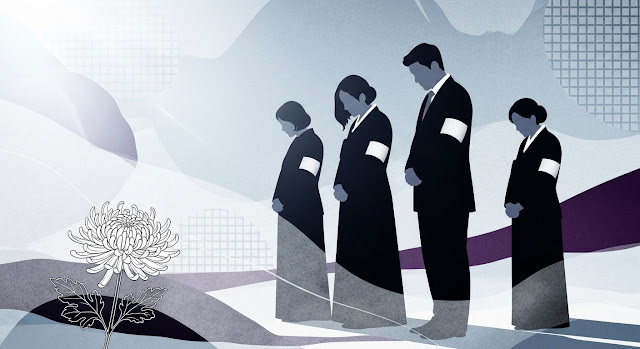
Where Tradition Meets Modern Etiquette
The Heart of Korean Funerals
When “Oh Myung-ah’s” grandmother passed away at 93, family friends drove an hour from Seoul to Incheon—not because they knew her well, but to support the grieving family. This perfectly captures what makes Korean funerals unique: they’re centered on comforting the living.
“Oh Myung-ah” 할머니께서 93세로 돌아가셨을 때, 가족 친구들은 서울에서 인천까지 한 시간을 운전해서 왔습니다. 고인을 잘 알아서가 아니라, 슬픔에 잠긴 가족을 위로하기 위해서였죠. 이것이 바로 한국 장례식의 독특한 특징입니다. 고인보다는 살아있는 가족을 위로하는 데 중점을 둡니다.
Unlike Western funerals that honor the deceased, Korean funeral culture emphasizes social obligation and family support. The three-day mourning period becomes an unexpected reunion where relatives catch up on life while sharing grief together.
서양의 장례식이 고인을 기리는 것과 달리, 한국 장례 문화는 사회적 의무와 가족 지원을 강조합니다. 3일간의 애도 기간은 친척들이 슬픔을 나누면서 서로의 삶을 이야기하는 예상치 못한 재회의 장이 되곤 합니다.
.png "Korean Funeral Culture")
From White to Black: Evolution of Mourning
Traditional Joseon-era funerals were elaborate Confucian rituals where mourning reflected one’s virtue and filial duty. Sons wore undyed hemp robes with straw belts, and white symbolized purity and spiritual return.
조선시대의 전통 장례식은 애도가 효와 덕을 반영하는 정교한 유교 의식이었습니다. 아들들은 염색하지 않은 삼베 옷에 짚으로 만든 띠를 매었고, 흰색은 순수함과 영적 회귀를 상징했습니다.
But modernization changed everything. Japanese colonial rule (1910-1945) introduced black mourning attire from Western customs, gradually replacing traditional white. Today’s funerals happen in hospital-based halls rather than private homes, reflecting Korea’s rapid urbanization.
하지만 근대화가 모든 것을 바꿔놓았습니다. 일제강점기(1910-1945) 동안 서양 관습에서 비롯된 검은색 상복이 도입되어 전통적인 흰색을 점차 대체했습니다. 오늘날의 장례식은 개인 집이 아닌 병원 기반 장례식장에서 열리며, 이는 한국의 급속한 도시화를 반영합니다.
.png "Korean Funeral Culture")
Modern Funeral Etiquette
Navigating Korean funeral etiquette can feel intimidating, but the basics are straightforward. Dress in black or dark navy suits with minimal accessories—most office workers keep funeral attire ready at home since many attend after work.
한국 장례 예절을 따르는 것이 부담스럽게 느껴질 수 있지만, 기본은 간단합니다. 검은색이나 진한 남색 정장에 최소한의 액세서리를 착용하세요. 대부분의 직장인들은 퇴근 후 장례식에 참석하기 때문에 집에 장례 복장을 준비해 둡니다.
Remember to bring socks—many halls require shoe removal. Condolence money goes to the entrance desk, not directly to the family. At the altar, offer a chrysanthemum or incense, bow twice (gender rules have relaxed), acknowledge the chief mourner, and step back respectfully.
양말을 꼭 챙기세요. 많은 장례식장에서 신발을 벗어야 합니다. 조의금은 가족에게 직접 전달하지 않고 입구 데스크에 전달합니다. 제단에서는 국화나 향을 올리고, 두 번 절하고(성별 규칙은 완화되었습니다), 상주에게 인사하고, 공손하게 물러나세요.
The visit often ends with yukgaejang soup, its red color believed to ward off evil spirits, and optional soju. It’s a moment to share warmth amid sorrow.
방문은 종종 육개장으로 마무리됩니다. 붉은 색이 악귀를 쫓는다고 믿어지며, 소주는 선택 사항입니다. 슬픔 속에서 따뜻함을 나누는 순간이죠.
.png "Korean Funeral Culture")