
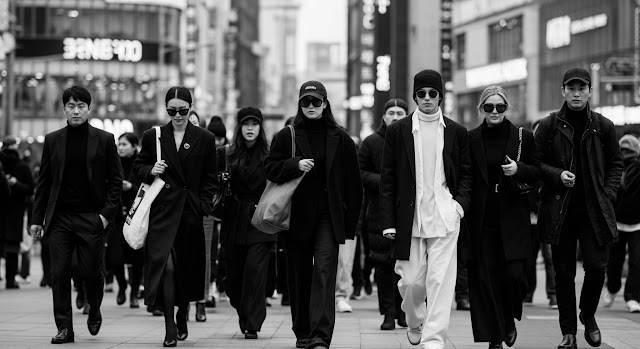
The Psychology Behind Korea’s Monochrome Fashion
Walking through the bustling streets of Seoul, you’ll notice something striking: a sea of black, white, and gray clothing dominating the urban landscape. This isn’t just a coincidence or a passing trend—it’s a reflection of deep-rooted cultural values and practical choices that define Korean fashion culture.
서울의 번화한 거리를 걷다 보면 눈에 띄는 한 가지가 있습니다. 바로 검정, 흰색, 회색 옷차림이 도시 풍경을 지배하고 있다는 점이죠. 이것은 단순한 우연이나 일시적인 트렌드가 아니라, 한국 패션 문화를 정의하는 깊이 뿌리박힌 문화적 가치와 실용적 선택의 반영입니다.
.jpg "Monochrome Fashion")
The Cultural Psychology of Blending In
When “Isabel Smith”, an American English teacher, first arrived in Seoul, she was shocked by the monochrome fashion scene. Her vibrant outfits and bold makeup made her stand out everywhere. She even tried to buy orange earrings at a Chanel store, only to be told they don’t sell such colors in Korea because “it doesn’t sell well here.”
미국인 영어 교사인 “Isabel Smith”가 처음 서울에 왔을 때, 그녀는 단색조 패션 현장에 충격을 받았습니다. 그녀의 화려한 옷차림과 과감한 메이크업은 어디서나 눈에 띄었죠. 심지어 샤넬 매장에서 오렌지색 귀걸이를 구매하려 했지만, “한국에서는 잘 팔리지 않아” 그런 색상을 판매하지 않는다는 말을 들었습니다.
.jpg "Monochrome Fashion")
The Numbers Don’t Lie: 62% Monochrome
According to CJ Logistics’ 2021 data analysis, a staggering 62% of all clothing items delivered in Korea were monochromatic: 38% black, 15% white, and 9% gray. This overwhelming preference isn’t just anecdotal—it’s statistically proven.
CJ 로지스틱스의 2021년 데이터 분석에 따르면, 한국에서 배송된 모든 의류 품목의 무려 62%가 단색조였습니다. 검정 38%, 흰색 15%, 회색 9%였죠. 이 압도적인 선호는 단순한 일화가 아니라 통계적으로 입증된 사실입니다.
“I Don’t Want to Stand Out”
“Kwon Eun-ji”, 34, shared her experience: her closet is filled with white, black, and navy tones. Once she wore a yellow cardigan to work, and everyone commented on it. Though positive, the attention made her uncomfortable. “I just want to blend in,” she explained.
34세의 “Kwon Eun-ji”는 자신의 경험을 공유했습니다. 그녀의 옷장은 흰색, 검정, 네이비 톤으로 가득 차 있습니다. 한번은 노란색 가디건을 입고 출근했는데, 모든 사람이 그것에 대해 언급했습니다. 긍정적이었지만, 그 관심이 그녀를 불편하게 만들었죠. “저는 그냥 자연스럽게 섞이고 싶어요”라고 그녀는 설명했습니다.
.jpg "Monochrome Fashion")
Professor “Lee Ji-kyung” of Kyungsung University explains that neutral colors convey humility and social harmony—core values in Korean culture. Koreans were historically called “the white-clad people” for their preference for white hanbok, which has now expanded to black and gray.
경성대학교의 “Lee Ji-kyung” 교수는 중성 색상이 겸손과 사회적 조화를 전달한다고 설명합니다. 이는 한국 문화의 핵심 가치이죠. 한국인들은 역사적으로 흰색 한복을 선호하여 “백의민족”이라 불렸으며, 이는 이제 검정과 회색으로 확장되었습니다.
Practicality Over Expression
For “Park Nam-jin”, a 33-year-old office worker, monochrome fashion is about efficiency. With over 12 hours a day spent on work-related activities, he doesn’t want the hassle of matching colors. “Neutral clothes go with everything,” he said.
33세 직장인인 “Park Nam-jin”에게 단색조 패션은 효율성의 문제입니다. 하루에 12시간 이상을 업무 관련 활동에 보내는 그는 색상을 맞추는 번거로움을 원하지 않습니다. “중성 색상 옷은 모든 것과 잘 어울려요”라고 그는 말했습니다.
.jpg "Monochrome Fashion")
Professor “Lee Jee-hyun” of Yonsei University adds that neutral tones dominate for practical reasons: they mix easily, reduce styling mistakes, and allow economical outfit combinations. Black outerwear is especially popular in winter because it hides stains and matches everything.
연세대학교의 “Lee Jee-hyun” 교수는 중성 톤이 실용적인 이유로 지배적이라고 덧붙입니다. 쉽게 혼합되고, 스타일링 실수를 줄이며, 경제적인 의상 조합을 가능하게 하죠. 특히 겨울에는 얼룩을 숨기고 모든 것과 어울리기 때문에 검정색 겉옷이 인기입니다.
Harmony Over Individuality
In Korea’s fashion landscape, monochrome isn’t just about color—it’s about social harmony, practicality, and cultural identity. As “Smith” reflected, “Maybe color here isn’t about the clothes—it’s about harmony.” This philosophy continues to shape Seoul’s streets, where blending in remains more valued than standing out.
한국의 패션 풍경에서 단색조는 단순히 색상에 관한 것이 아닙니다. 그것은 사회적 조화, 실용성, 문화적 정체성에 관한 것이죠. “Smith”가 성찰했듯이, “아마도 여기서 색상은 옷에 관한 것이 아니라 조화에 관한 것인가 봐요.” 이 철학은 계속해서 서울의 거리를 형성하며, 눈에 띄는 것보다 자연스럽게 어울리는 것이 더 가치 있게 여겨집니다.