
Why Pork and Oysters Are Essential for Kimjang Season
The Perfect Pairing: Tradition Meets Nutrition
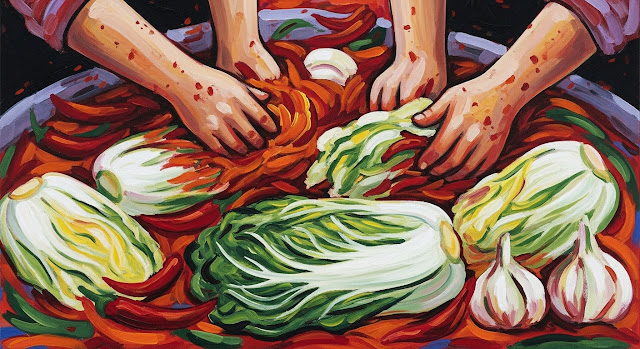
Winter’s here and kimjang season is officially underway! If you grew up in Korea, you probably remember those marathon kimchi-making days with family and neighbors, followed by the ultimate reward: freshly made kimchi with boiled pork and oysters. Turns out, this wasn’t just about satisfying hungry workers—it’s actually a genius nutritional combo that our ancestors figured out long before modern science did.
겨울이 다가오면 김장철이 시작됩니다. 한국에서 자라셨다면 가족과 이웃들이 함께 하루 종일 김치를 담그고, 그 보상으로 갓 담근 김치와 함께 삶은 돼지고기와 굴을 먹던 추억이 있으실 겁니다. 이것은 단순히 배고픈 일꾼들을 만족시키기 위한 것이 아니라, 현대 과학이 밝혀내기 훨씬 전에 우리 조상들이 알아낸 천재적인 영양 조합이었습니다.
Boiled Pork: The Ultimate Energy Booster
Here’s something wild: pork has nearly 10 times more vitamin B1 than beef! That’s why your grandma always insisted on serving boiled pork after a long day of kimjang. Vitamin B1 is your body’s fatigue fighter, helping you recover from exhausting physical work. The best cuts? Tenderloin wins, followed by hind leg and foreleg. Just 120 grams gives you your daily dose of B1. Plus, choosing hind leg over pork belly means one-third the calories and 1.5 times more protein—win-win!
돼지고기에는 소고기보다 비타민 B1이 거의 10배나 많이 들어있습니다! 그래서 할머니께서 김장 후 삶은 돼지고기를 꼭 내어주셨던 거죠. 비타민 B1은 피로를 풀어주는 영양소로, 힘든 육체노동 후 회복을 도와줍니다. 가장 좋은 부위는 안심이며, 뒷다리와 앞다리가 그 뒤를 따릅니다. 단 120g만 섭취하면 하루 필요량을 채울 수 있습니다. 게다가 삼겹살 대신 뒷다리를 선택하면 칼로리는 3분의 1로 줄고 단백질은 1.5배 더 많아집니다!
.jpg "Kimjang")
Oysters Meet Fresh Kimchi: A Power Duo
Oysters hit their prime during kimjang season—nature’s perfect timing! They’re loaded with iron and magnesium (great for preventing anemia), plus zinc for vitality. But here’s the cool part: fresh kimchi’s garlic and ginger actually help your body absorb more iron from those oysters. The allicin in garlic and gingerol in ginger also work as natural antibacterial agents. Raw or cooked, oysters keep their nutritional punch either way.
굴은 김장철에 제철을 맞이합니다—자연의 완벽한 타이밍이죠! 철분과 마그네슘이 풍부하여 빈혈 예방에 좋고, 아연은 활력을 더해줍니다. 더 흥미로운 점은 갓 담근 김치의 마늘과 생강이 굴의 철분 흡수를 높여준다는 것입니다. 마늘의 알리신과 생강의 진저롤은 천연 항균 작용도 합니다. 날것이든 익힌 것이든 굴의 영양가는 그대로 유지됩니다.
Napa Cabbage Balances the Meat
Ever wonder why kimchi and pork just work together so perfectly? The dietary fiber in napa cabbage prevents saturated fat and cholesterol buildup from fatty pork cuts. Cabbage’s isothiocyanates help eliminate bodily waste, while kimchi’s garlic, ginger, and green onions support vascular health—basically offsetting the effects of eating meat. It’s like having your own internal cleanup crew!
왜 김치와 돼지고기가 그렇게 완벽하게 어울리는지 궁금하셨나요? 배추의 식이섬유가 지방이 많은 돼지고기의 포화지방과 콜레스테롤 축적을 막아줍니다. 배추의 이소티오시아네이트는 체내 노폐물 배출을 돕고, 김치의 마늘, 생강, 파는 혈관 건강을 지원하여 육류 섭취의 영향을 상쇄시킵니다. 마치 체내에 자체 청소팀이 있는 것과 같습니다!
.jpg "Kimjang")
Boiling Beats Grilling for Health
With colon cancer rising rapidly in Korea (33,158 new cases in 2022!), cooking method matters. Grilling meat until charred increases cancer risk due to carcinogens from burnt fat. Boiling—the traditional kimjang method—dramatically reduces these harmful compounds. So while grilled pork is delicious, boiled pork with fresh kimchi remains the healthier winter choice.
대장암이 한국에서 급증하고 있는 가운데(2022년에만 33,158건!), 조리 방법이 중요합니다. 고기를 태울 때까지 구우면 탄 지방에서 나오는 발암물질로 인해 암 위험이 증가합니다. 전통적인 김장 방식인 삶기는 이러한 유해 물질을 크게 줄여줍니다. 그러니 구운 돼지고기도 맛있지만, 신선한 김치와 함께 먹는 삶은 돼지고기가 더 건강한 겨울 선택입니다.