
The Story Behind Yudong Golbaengi
Introduction: Korea’s Unique Seafood Obsession
Did you know 90% of all whelks caught worldwide end up in Korea? British fishermen catch these sea snails exclusively for Korean consumers, and many don’t even know what they taste like. While Europeans consider whelks rubbery and unappetizing, these creatures have made many British fishermen millionaires.
전 세계에서 잡히는 골뱅이의 90%가 한국으로 향한다는 사실을 아시나요? 영국 어부들은 오로지 한국인들을 위해 골뱅이를 잡고 있으며, 많은 어부들은 골뱅이의 맛조차 모른 채 잡고 있습니다. 유럽인들이 고무 같다며 싫어하는 이 해산물이 영국 어부들에게는 억대 연봉을 안겨주고 있습니다.
.jpg "Korean food whelks")
From Export Delicacy to National Favorite
Whelks weren’t always this popular in Korea. Originally limited to coastal regions due to spoilage issues, whelks became exportable after the 1965 Korea-Japan trade agreement. “Yudong Golbaengi” first created canned whelks in 1980, transforming this seafood into a nationwide sensation.
골뱅이는 처음부터 이렇게 인기 있던 식재료가 아니었습니다. 상하기 쉬운 특성 때문에 산지 근처에서만 먹을 수 있었던 골뱅이는 1965년 한일 협정 이후 수출되기 시작했습니다. “유동골뱅이”가 1980년에 첫 통조림을 출시하면서 전국적인 인기 음식으로 자리잡게 되었습니다.
The Euljiro Connection: Korea’s Whelk Capital
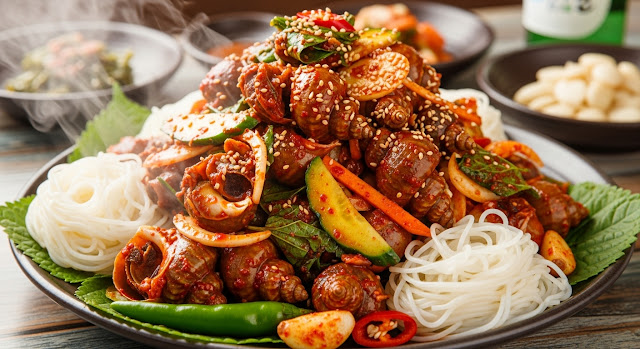
Interestingly, Euljiro in Seoul—far from any ocean—became Korea’s whelk district. In the 1970s-80s, this printing hub attracted designers and editors who enjoyed beer with spicy whelk salad after work. The famous “Euljiro Golbaengi” style was born, mixing canned whelks with vegetables, garlic, and gochugaru.
흥미롭게도 바다와는 거리가 먼 서울 을지로가 한국의 골뱅이 본산이 되었습니다. 70-80년대 인쇄업의 중심지였던 을지로에는 디자이너와 편집자들이 모여들었고, 그들은 일을 마친 후 맥주와 함께 매콤한 골뱅이 무침을 즐겼습니다. 골뱅이 통조림에 파채, 마늘, 고춧가루를 버무린 유명한 “을지로 골뱅이” 스타일이 탄생한 것입니다.
.jpg "Korean food whelks")
Why British Whelks? The Quality Solution
By the late 1980s, domestic whelk supplies couldn’t meet demand. “Yudong” explored global sources—China and Vietnam offered cheap options but lacked texture; Chile’s quality was inferior; Canada’s was excellent but expensive. British whelks from cold North Atlantic waters provided the perfect balance: chewy texture, strict quality control, and reasonable pricing.
1980년대 후반, 국내 골뱅이 공급이 수요를 따라가지 못하게 되었습니다. “유동”은 전 세계 산지를 탐색했습니다. 중국과 베트남산은 저렴했지만 식감이 부족했고, 칠레산은 품질이 떨어졌으며, 캐나다산은 훌륭했지만 너무 비쌌습니다. 북대서양의 차가운 바다에서 잡히는 영국산 골뱅이는 쫄깃한 식감과 엄격한 품질 관리, 합리적인 가격이라는 완벽한 균형을 제공했습니다.
The British Perspective: From Waste to Wealth
British fishermen once threw whelks back into the sea, viewing them as rubber-textured “sea snails” with no culinary value. When Korean companies approached them to buy whelks, they were baffled. Today, Korean demand has created a thriving industry—British whelk factories’ fortunes now depend on Korea’s economic health, as proven during the 1998 Asian Financial Crisis when half these facilities closed.
영국 어부들은 한때 골뱅이를 단순히 고무 같은 식감의 “바다 달팽이”로 여기며 다시 바다로 던져버렸습니다. 한국 기업들이 골뱅이를 사겠다고 제안했을 때 그들은 당황했습니다. 오늘날 한국의 수요는 번창하는 산업을 만들어냈으며, 영국 골뱅이 공장의 운명은 한국 경제 상황에 달려 있게 되었습니다. 이는 1998년 아시아 금융위기 때 절반의 공장이 문을 닫은 것으로 증명되었습니다.
.jpg "Korean food whelks")
Quality Secrets: Why Yudong Leads the Market
“Yudong Golbaengi” dominates over 50% of Korea’s canned whelk market through strategic advantages. The company sources from UK, Ireland, and Norway—diversifying supply while maintaining quality. Their cans contain 10-14% more actual whelk meat than labeled, as they account for moisture loss during processing. Higher solid content means richer broth flavor without excessive seasoning.
“유동골뱅이”는 전략적 우위를 통해 한국 골뱅이 통조림 시장의 50% 이상을 장악하고 있습니다. 회사는 영국, 아일랜드, 노르웨이에서 공급받아 품질을 유지하면서 공급을 다변화합니다. 그들의 캔에는 표시된 것보다 10-14% 더 많은 실제 골뱅이 살이 들어 있는데, 이는 가공 중 수분 손실을 감안한 것입니다. 높은 고형량은 과도한 조미료 없이도 더 풍부한 국물 맛을 의미합니다.
Conclusion: A Cultural Phenomenon
From humble beginnings as a regional specialty, whelks have become a 70%-revenue-generating powerhouse for “Yudong Mulsan”. As K-food gains global popularity, Koreans worry foreigners might discover this delicacy—potentially creating shortages for domestic consumption. For now, Korea remains the undisputed champion of whelk consumption worldwide.
지역 특산물이라는 소박한 시작에서부터 골뱅이는 “유동물산” 매출의 70%를 창출하는 효자 상품이 되었습니다. K-푸드가 전 세계적으로 인기를 얻으면서 한국인들은 외국인들이 이 별미를 발견할까 봐 걱정하고 있습니다. 이는 국내 소비에 부족을 초래할 수 있기 때문입니다. 현재로서는 한국이 전 세계 골뱅이 소비의 확실한 챔피언으로 남아 있습니다.