
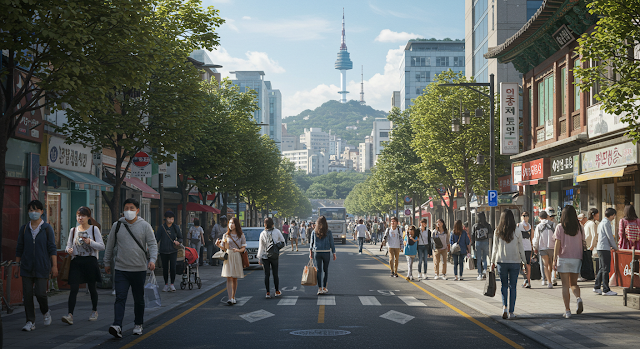
The Unseen Challenge of a Changing Society
The Invisible Problem of Xenophobia
Xenophobia in South Korea is often dismissed or downplayed, especially in online spaces. Many Koreans believe that discrimination is either exaggerated or not as serious as in other countries. Comments on news articles frequently claim that racism is a global issue and that Korea’s problems are minor in comparison.
한국에서 외국인 혐오는 종종 무시되거나 과소평가됩니다. 특히 온라인 공간에서 이러한 경향이 두드러집니다. 많은 한국인들은 차별이 과장되었거나 다른 나라에 비해 심각하지 않다고 생각합니다. 뉴스 기사에 달린 댓글에서도 인종차별은 전 세계적인 문제이며, 한국의 문제는 그에 비해 사소하다는 주장이 자주 보입니다.
.jpg "Facing Xenophobia in Korea")
Subtle but Real: Everyday Experiences
Despite the perception that racism is subtle in Korea, real-life experiences tell a different story. For example, Southeast Asians often report being treated with less respect in shops, reflecting a bias linked to economic status. These incidents may not be violent, but they are persistent and hurtful.
한국에서 인종차별이 미묘하다고 생각하는 인식과 달리, 실제 경험은 다릅니다. 예를 들어 동남아시아 출신 외국인은 상점에서 덜 친절한 대우를 받는 경우가 많다고 합니다. 이는 경제적 지위와 연결된 편견을 보여주며, 폭력적이지는 않더라도 지속적이고 상처가 됩니다.
.jpg "Facing Xenophobia in Korea")
Korean-Style Racism and Its Roots
Experts point out that Korean-style racism is shaped by internalized Western racial hierarchies, where Koreans see themselves as between white and Black people. Economic factors further amplify prejudice, especially against immigrants from less wealthy countries. Historical factors, such as the long-held belief in ethnic homogeneity, also make it difficult for many Koreans to recognize or discuss these issues.
전문가들은 한국식 인종차별이 서구의 인종적 위계질서를 내면화한 결과라고 지적합니다. 한국인은 자신들이 백인과 흑인 사이 어딘가에 있다고 여기며, 경제적 요인이 특히 덜 부유한 국가 출신 이주민에 대한 편견을 강화합니다. 오랜 민족 단일성 신화 등 역사적 요인도 이런 문제를 인식하고 논의하는 데 걸림돌이 되고 있습니다.
.jpg "Facing Xenophobia in Korea")
The Data Gap and Legal Challenges
A lack of official data and legal frameworks makes it harder to address racial discrimination in Korea. There is little statistical tracking of hate crimes, and no specific laws to punish racial hate. This invisibility further complicates efforts to recognize and solve the problem.
한국에서는 외국인 관련 범죄나 인종차별에 대한 공식 통계가 거의 없고, 인종 혐오 범죄를 처벌할 법적 근거도 부족합니다. 이런 정보의 부재는 문제를 인식하고 해결하려는 노력을 더욱 어렵게 만듭니다.
.jpg "Facing Xenophobia in Korea")
A Call for Change in a Multicultural Era
With nearly 5% of Korea’s population now made up of foreign residents, the country is on the brink of becoming a truly multicultural society. Recent debates over hiring foreign workers and the introduction of Filipina domestic helpers show that Korean society is becoming more diverse. Experts warn that unless Korea confronts xenophobia openly, these issues may worsen as the population continues to diversify and age.
이제 한국 인구의 약 5%가 외국인으로, 다문화 사회로 진입하고 있습니다. 외국인 가사도우미 도입, 외국인 버스기사 채용 논란 등은 한국 사회가 점점 다양해지고 있음을 보여줍니다. 전문가들은 한국이 외국인 혐오 문제를 제대로 다루지 않으면, 인구 고령화와 다양화가 심화될수록 문제가 더욱 커질 수 있다고 경고합니다.